

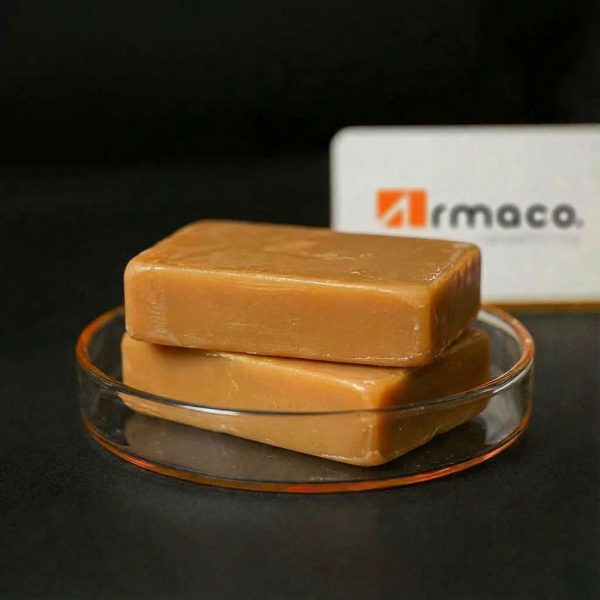
Slack wax is neither a consumer end product nor a minor ingredient; it is the “decision point” in many industrial processes. Its incorrect selection can result in increased treatment costs, decreased production efficiency, or failure to meet the standards of the target market.
The use of slack wax varies depending on its grade and technical specifications, but it is typically used in the following industries:
In each of these applications, choosing the right grade plays a decisive role in the quality of the final product and the cost.
Slack wax is a basic and decisive material in the production chain of many industrial products; a material that, although at first glance, is considered an intermediate product of oil refining, its incorrect selection can directly affect the quality of the final product, production efficiency and even export costs. For industrial buyers, knowing "what" is not enough; the main issue is that Which type, with what specifications and for what application? To be chosen.

In the B2B space, especially when purchasing on an industrial scale or for export purposes, seemingly minor differences such as oil percentage, melting point or packaging type can become a competitive advantage or a hidden risk. For this reason, this content is not just a technical introduction, but a decision-making path designed for supply managers, manufacturers and institutional buyers seeking to make informed and rational choices.
In this guide, an attempt has been made to rely on the actual experience of producing and exporting industrial waxes in Arash MahyaThe subject should be examined from a practical and commercial perspective, so that after reading it, the audience will understand the selection criteria, avoid repeating common mistakes, and be able to identify the most appropriate option according to their real needs.
Slack wax specifications vary depending on the grade and oil content. The table below shows common ranges of slack wax specifications for light and heavy grades, based on ASTM standard test data.
Technical specification | Slack wax light (Light) | Heavy Slack Wax (Heavy) | Test method |
Color (ASTM Color) | 0.5 – 3 | 0.5 – 1.5 | ASTM D1500 |
Oil percentage (%wt) | 3 – 8 % | 7 – 11 % | ASTM D721 |
Kinematic viscosity @100°C | 3 – 6 cSt | 6 – 7.5 cSt | ASTM D445 |
Melting/Freezing Point (°C) | 55 – 60 °C | 56 – 65 °C | ASTM D87 |
Density @15.6°C | Approximately 810 kg/m³ | 810 – 840 kg/m³ | ASTM D4052 |
Flash Point (Open Cup) | ≥ 240 °C | ≥ 240 °C | ASTM D92 |
The above values are as follows: Common industrial ranges are presented and may vary depending on the source of production, refining conditions and end use purpose. The selection of the appropriate grade of slack wax should be based on Oil percentage, melting point and expected process behavior be done in the production unit, not just a specific number in the table.
Technical specifications of slack wax can vary depending on grade, refinery feed and processing conditions. The values in the table are provided as a technical guide.
In the chain of oil refining and the production of paraffin-based derivatives, slack wax is a transitory but very decisive material. It is at a stage where technical and quality decisions on it directly determine the path to the final products. Simply put, slack wax is neither a final product nor an insignificant waste; it is a foodstuff whose quality and characteristics limit or facilitate the range of subsequent choices of the producer.
In industrial processes, slack wax is usually used as an input to paraffin production units, Vaseline and some industrial formulations are used. At this point, factors such as residual oil content, thermal behavior, and material stability in subsequent processes become important. If these parameters are not aligned with the needs of the production line, the result will be increased treatment costs, decreased final product quality, or reduced productivity.
From a B2B buyer’s perspective, Slack Wax’s role goes beyond being a raw material. It determines:
For this reason, a professional view of slack wax is a view of a "decision point" in the production chain; a point where the right choice can make the production path more economical, sustainable, and predictable.
When purchasing industrial slack wax, focusing solely on the initial price can be misleading. The following criteria directly influence the purchasing decision:
The correct choice is made when these factors are examined together and based on the actual purpose of consumption.
In industrial purchasing, technical specifications are valuable when they can lead to a practical decision. In the case of slack wax, some parameters directly affect the efficiency of the production line, the final cost, and even the feasibility of exporting. Ignoring any of these criteria can lead to the selection of an inappropriate grade and incurring hidden costs.
Oil percentage and its consequences
The oil content is one of the most important factors in evaluating this material. The higher the oil content, the softer and more processable the material will be, but it will require more finishing operations. This is not necessarily a disadvantage for factories that do their own degreasing and decolorization, but it can increase production costs and time for units looking for a more ready-made feed.
From a purchasing perspective, the percentage of oil should be selected according to the technical capabilities of the production line and the ultimate goal, not simply based on the lowest number or price.
Melting point is directly related to the thermal behavior of the material in subsequent processes. Grades with lower melting points are advantageous in some applications, such as the production of special candles or emulsions, while for other uses they may not provide the necessary stability. Incorrect selection in this area can lead to problems such as instability of the final product or loss of quality under different temperature conditions.
The professional buyer should consider melting point not as a fixed number, but as an indicator of compatibility with the process and end-use conditions.
Color and odor, although seemingly secondary characteristics, can actually indicate the quality of the refining and the amount of further processing required. A darker color or an unpleasant odor usually means more refining is needed, which directly increases production costs and time.
In export purchases, these two factors become even more sensitive, as destination market standards and foreign customer expectations can limit the scope of acceptance. Therefore, paying attention to color and smell is part of purchasing risk management, not just a superficial preference.
In many sources, slack wax types are introduced simply by grade or laboratory specification. However, for the industrial buyer, this classification makes sense when it comes directly to Actual use, production conditions and purchase purpose In this section, each grade is examined from a "right time to use" perspective, not just a technical definition.
Light grades typically have a lower oil content and a lower melting point, making them suitable for applications that require easy meltability and rapid processing. This grade is often selected in units that intend to move the material into the next stage of production with minimal finishing operations.
In scenarios such as the production of certain types of candles, matches, or certain emulsions, a light grade can reduce energy costs and process time. However, it makes sense to choose it when high thermal stability or a harder structure of the final product are not a priority.

The heavy grade behaves differently in the production line due to its higher oil content and higher melting point. This grade is usually chosen for industries that either perform a deeper refining process themselves, or require a more stable product. In this case, the less initial flexibility is compensated for by better quality and control in the final stage.
For some paraffin producers or specific industrial applications, heavy grade allows for more precise control of final properties, provided the necessary technical infrastructure is in place to process it.
A common mistake in industrial purchasing is to select a grade based solely on availability or price. Using a light grade in applications that require high thermal stability, or selecting a heavy grade without considering processing costs, can call into question the entire economic logic of the purchase.
In practice, any grade is considered inappropriate when it is The final production goal, the technical capacity of the line, and the conditions of the target market. Identifying this mismatch is an important part of professional decision-making in B2B purchasing.
In B2B purchases, mistakes don't always come from "lack of information"; they often come from Incorrect analysis of available information Market experience shows that many production or export challenges are rooted in decisions made at the raw material selection stage. The following is a review of the most common mistakes that industrial buyers make in this area.
One of the most common mistakes is choosing a product based on the lowest price, without considering the subsequent costs. A grade that initially appears more economical may later require more processing, higher energy consumption or even formulation modifications. In such cases, the initial low price quickly gives way to a higher final cost.
Selecting a raw material without considering the end use creates a great risk for the buyer. A product that performs well for one application may not necessarily be reliable for another. This mismatch can lead to a decrease in the quality of the final product, customer dissatisfaction, or even lack of acceptance in the target market.
In industrial purchases, and especially export purchases, technical specifications are only part of the equation. Packaging type, storage conditions, the possibility of heating during unloading, and compatibility with transportation infrastructure are all factors that, if not considered from the beginning, can disrupt the supply process.
Sometimes buyers assume that a product with a seemingly similar name and specifications will perform the same from all sources. This view can lead to overlooking important differences in quality consistency, manufacturing process control, and supplier experience. In the B2B marketplace, consistency and predictability are often valued more highly than a cheap one-time purchase.
In many cases, the industrial buyer is looking for a practical framework for decision-making, rather than a thorough examination of all the technical details. This section is designed to be scenario-driven to align raw material selection with real-world production and market conditions.
For units whose main focus is paraffin production, quality consistency and process controllability are a priority. In this scenario, choosing a material that exhibits consistent behavior during the degreasing and decolorization process is of utmost importance. A grade that allows for fine-tuning of the final specifications, even if it requires additional finishing operations, is usually a more logical choice because it increases the quality control of the final product.
In these applications, ease of melting, uniformity of thermal behavior, and compatibility with the production line become more important. Grades with lower melting points and easier processing can increase production efficiency and reduce the risk of quality fluctuations. In this case, choosing a material that requires minimal modification to the formulation is a practical advantage.
In purchasing for export, in addition to technical specifications, the requirements of the destination market play a decisive role. Color and odor stability, type of packaging, and the possibility of easy unloading at the destination are among the factors that should be considered from the beginning. The wrong choice at this stage can lead to delays, unforeseen costs, or even rejection of the shipment.
In this scenario, alignment between product specifications, logistics, and target market expectations is the main selection criterion.
In industrial procurement, especially when sourcing for export, packaging and logistics are considered part of product quality, not an afterthought. A poor choice in this area can challenge the entire procurement process, even if the material is of good quality.

The type of packaging directly affects the cost of transportation, unloading and storage. Metal drums, ISO tanks and flexitanks each have their own advantages and limitations. For some buyers, reducing the initial cost of packaging is a priority; but in practice, this decision can increase ancillary costs such as difficulty in unloading or the need for additional equipment.
In export, product compatibility with the destination infrastructure is particularly important. Some markets require heated containers for easy unloading, while others have specific standards for packaging or labeling. Ignoring these requirements can lead to delays in clearance or unexpected cost increases.
From the perspective of the B2B buyer, logistics is part of purchasing risk management. Coordination between product specifications, packaging type, and transportation conditions ensures that the quality of the material is maintained until the moment of consumption. This coordination plays a key role in maintaining quality consistency and end customer satisfaction, especially in bulk shipments or long distances.
In industrial purchasing, the right decision is made when technical specifications, production conditions and logistical realities are seen together. Market experience shows that the selection of Slack Wax is successful when it is not based solely on the theoretical definition or initial price, but also with regard to End use, technical capabilities of the production line and target market requirements To be done.
Grade, oil percentage, melting point, color, and odor each have meaning when they serve a specific purpose; a purpose that could be sustainable production, reduced hidden costs, or export success. By understanding these connections, a professional buyer reduces purchasing risk and makes the supply chain more predictable.
Ultimately, the decision-maker’s view of this material is to look at a key point in the production chain; a point where informed choice determines the quality of the final product and the efficiency of the entire process. This approach is the basis for sustainable, long-term partnerships in the B2B market.