

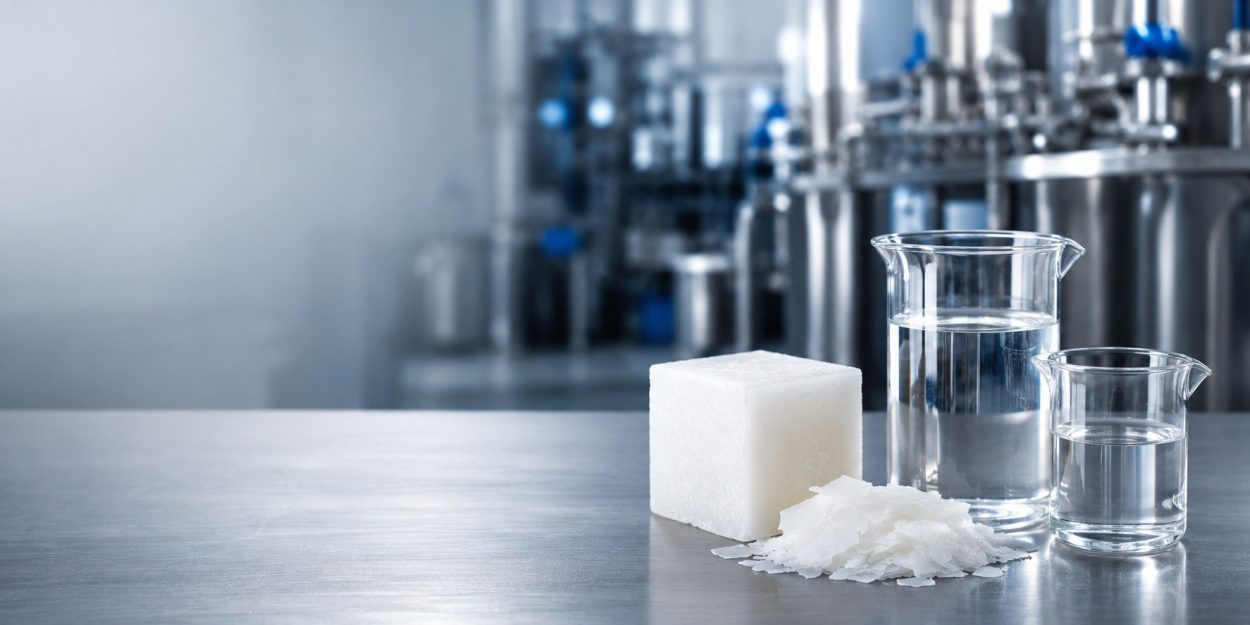
What is a paraffin solvent? Contrary to what it may seem, this term is not the name of a single chemical substance; rather, it refers to a solvent or solvent system that can dissolve, dilute, or remove a specific type of paraffin under the desired process conditions. Since paraffins are predominantly hydrocarbon in nature and non-polar, water is usually not a suitable solvent for paraffin wax, and the choice of solvent should be based on options that are compatible with the material in terms of polarity, temperature, safety, and application.
In Arash Mahya, we do not see the answer to the question "What is halal paraffin?" separate from the type of paraffin. What Is Paraffin?, what characteristics the solid paraffin wax has, and what grade of liquid paraffin is used; all of these affect the behavior of the material against the solvent. Therefore, instead of introducing a "best solvent" for all conditions, the selection should be made based on the process and technical documentation.
What is the solvent for paraffin and why does paraffin not dissolve in water?
To better understand the issue, we need to clarify the difference between “melting” and “dissolving.” Paraffin wax can melt and change from a solid to a liquid as the temperature increases, but this phase change does not mean it is dissolved in a solvent. In dissolution, the paraffin molecules are distributed in the solvent phase, creating a soluble or, to a certain extent, homogeneous system.
Paraffin wax is insoluble in water. The main reason is the polar nature of water compared to the largely non-polar structure of paraffinic hydrocarbons. For this reason, in many industrial and laboratory applications, organic or hydrocarbon solvents with greater compatibility are considered. Of course, “non-polarity” alone is not enough for selection; boiling point, evaporation rate, flash point, odor, residue, compatibility with equipment and HSE requirements are also decisive.
For this reason, if your goal is to find a solid paraffin solvent for a production line, cleaning, or laboratory test, you must first determine the type and grade of wax, the percentage of oil, the operating temperature, and the surface that will be in contact with the solvent. The correct answer is a process decision, not just a few chemicals.
Which substances can be solvents for paraffin?
In technical sources and industrial applications, groups of hydrocarbon and aromatic solvents can be shown to be compatible with many paraffins. However, the ability to dissolve paraffin does not mean that a substance is suitable for every application. Some solvents may have serious limitations in terms of occupational health, flammability, vapor emission, or compatibility with the final product.
Xylene; a well-known solvent for paraffin in laboratory applications
Xylene is one of the most well-known examples and is used in histology and pathology procedures to deparaffinize or deparaffinize tissue samples. This application shows that xylene can have good solvent compatibility with paraffin wax; however, its use must be done in accordance with the operating procedure, proper ventilation, safety data sheet, and facility requirements.
It is important that a documented laboratory application should not be extrapolated to an industrial process, home use, or final product formulation without evaluation. The type of equipment, contact time, material of components, and safety requirements can completely change the choice.
Toluene and hydrocarbon solvents; process-dependent selection
Toluene and some hydrocarbon solvent systems also have high solvency in nonpolar media and may be considered in some industrial processes. In practice, the choice between an aromatic solvent, an aliphatic hydrocarbon fraction, or a solvent blend depends on the speed of dissolution, operating temperature, evaporation rate, surface quality after drying, and safety requirements.
For industrial cleaning or formulation, it is best to check the actual product specifications, including boiling range, flash point, composition, residue after evaporation, and SDS/TDS information, rather than selecting based on the generic name “non-polar solvent.” Two solvents with the same brand name can have different practical behavior.
Why aren't benzene, carbon tetrachloride, and carbon disulfide generally recommended?
In some older texts or purely chemical lists, substances such as benzene, carbon tetrachloride, or carbon disulfide may be mentioned for their ability to dissolve hydrocarbons. However, solubility is only one criterion. Benzene is known to be carcinogenic, and carbon tetrachloride and carbon disulfide also have significant occupational and toxicological hazards. For this reason, these substances are not the general or default choice for dissolving paraffin and should not be recommended based solely on solubility.
If such substances are named in a specific method, the decision should be made with HSE assessment, workplace regulations, approved method and the opinion of the technical officer. In many applications, the practical aim is to select an option with sufficient efficacy and lower risk, not the strongest solvent available.
What are the uses of paraffin solvent?
The use of paraffin solvent depends on whether it is to remove wax from a tissue or surface, dilute it in an industrial system, or place it in solution for testing and sample preparation. The most important uses can be reviewed in several categories.
1. Deparaffinization in pathology laboratories
In tissue section preparation, paraffin wax is used to embed and preserve the specimen, and in subsequent steps it must be removed from the tissue for staining and microscopic examination. Xylene is one of the known solvents in this process. This use is completely process-dependent and should be performed according to the instructions of the kit, instrument, or laboratory.
2. Removing wax residue from industrial equipment and surfaces
In the production or use of paraffin wax, a layer of wax may remain on the tank, tool or surface. In such cases, a suitable paraffin solvent can be part of the cleaning procedure; however, the compatibility of the solvent with paint, rubber, sealant, plastic and metal must first be checked. Using an inappropriate solvent may damage the surface itself or create unwanted residue.
3. Assisting in formulation or mixing processes
In some industrial formulations, paraffin must be dispersed or dissolved in a hydrocarbon phase to facilitate mixing and application. In this case, the goal is not just “dissolving”; system stability, compatibility with other components, evaporation rate, and end-product properties are also important. Especially in food, pharmaceutical, or cosmetic applications, the grade and acceptability of the material must be considered independently of solubility.
4. Technical tests and sample preparation
In quality control or process development, it is sometimes necessary to evaluate the dissolution behavior of paraffin in a specific environment. Here, the choice of solvent can be part of the test method. For reliable results, the method should be reproducible and the type of paraffin, temperature, time, material ratio and observation or measurement method should be defined in the internal procedure; not just the name of a generic solvent.
7 Criteria for Choosing the Right Paraffin Solvent
If your practical question after knowing what paraffin solvent is is “Which option is best for my job?”, these seven criteria will clarify the decision-making path. The goal is not to prescribe a single solvent for all applications, but rather to choose an option that covers both technical performance and safety and quality requirements.
1. Paraffin type and grade
Solid paraffin wax, wax with different oil percentages, microcrystalline wax and Liquid paraffin They do not behave the same way towards solvents. Even within a product family, the distribution of hydrocarbons and physical properties can change the rate or extent of dissolution. Therefore, an actual sample of the consumer grade should be the basis for evaluation.
2. Process temperature
Increasing the temperature can facilitate the dissolution of many waxes, but it also alters the evaporation and ignition hazards. The working temperature must be consistent with the flash point, equipment limitations, and safety guidelines of the solvent. Heating the wax alone does not dissolve it; it may simply melt the wax.
3. Solving power and speed of operation
The appropriate solvent must have sufficient dissolution rate and speed under actual process conditions. The result of a bench test or a general source is not necessarily generalizable to the production line. It is better to perform compatibility testing with an actual paraffin sample and actual conditions and define acceptance criteria, such as solution clarity, clean-up time or residue level, in advance.
4. Evaporation rate and residue
In cleaning or coating, a solvent that evaporates too slowly may increase process time, and a solvent that evaporates too quickly can make the job difficult to control. The presence of odor or residue after evaporation may also be important to the final product or surface. These characteristics should be checked from TDS and practical testing.
5. Safety, flash point and occupational exposure
The SDS should be checked before using any organic solvent. Flammability, acute and chronic toxicity, occupational exposure limits, ventilation requirements and personal protective equipment are key selection criteria. This section cannot be covered by the general term “paraffin solvent” as each substance has its own hazard profile.
6. Compatibility with surface and equipment
The solvent may dissolve the paraffin well but may damage the polymer, paint, adhesive, gasket or surface coating. In industrial cleaning, spot testing on an inconspicuous area and checking the equipment manufacturer's recommendations can prevent damage. For sensitive lines, material compatibility should be part of the process validation.
7. Quality, grade and technical documents
Chemical name alone is not enough to make a purchase. COA, TDS, SDS, grade specifications and application compatibility should be reviewed. If solvent or paraffin is in contact with the final product, the requirements of that industry become more important. At Arash Mahya, for selecting a paraffin grade, the end use and specifications required by the customer must be clear before making a commercial decision.
What is the difference between solvent paraffin and liquid paraffin?
A common confusion in search results is the conflation of “paraffin solvent” with “liquid paraffin.” Liquid paraffin, or mineral oil, is a liquid hydrocarbon product and is used in industrial, healthcare, or specialty applications, depending on the grade; however, the term paraffin solvent describes a functional role, not a specific product.
For this reason, the term liquid paraffin solvent can also have two meanings: a solvent intended to dissolve or clean liquid paraffin, or a liquid solvent used for paraffin wax. To avoid confusion, it should first be clear what type of paraffin we are talking about. To learn about the differences in grades, you can read the article Types of liquid paraffin See.
Comparison table of common options for dissolving or removing paraffin
The table below is a general decision guide and is not a substitute for SDS, TDS, performance criteria or compatibility testing. The exact application of each option should be verified based on the actual material grade and process conditions.
| Option | Common use or location | Main advantage | Important limitation |
| Xylene | Specialized deparaffinization in histology and some technical processes | Known compatibility with paraffin wax | Volatile organic solvent; requires exposure control, ventilation and SDS |
| Toluene / Aromatic solvents | Some industrial or laboratory processes after evaluation | High resolving power in many non-polar systems | Flammability and exposure hazards; selection should be process-driven |
| Aliphatic hydrocarbon cuts or mixtures | Cleaning or industrial formulation depending on grade | Possibility to choose the evaporation range and characteristics appropriate to the process | Solvent power and residue should be tested for the actual product. |
| Water | General washing, not dissolving paraffin wax | Non-flammable and accessible | Paraffin wax is insoluble in water. |
| Old/Specialty Hazardous Solvents | Only in specific, controlled ways | They may be chemically capable of dissolving paraffin. | Serious health or workplace risks; not a general option |
Is candle solvent the same as paraffin solvent?
Most common candles are made with paraffin wax or a mixture of several waxes, so searching for "candle remover" usually involves removing wax. However, candles can contain dyes, fragrances, additives, or other waxes, and the surface the stain is on is also important. Solvents that dissolve wax can damage fabrics, wood finishes, plastics, or surface finishes.
For household stains, it is not recommended to directly select an industrial or aromatic solvent without a safety check. First, check the mechanical methods and the method recommended by the surface or textile manufacturer. If the process is industrial, the solvent should be selected with compatibility testing, SDS and HSE guidelines. Therefore, “candle solvent” is also not a single name for a specific substance.
Safety tips when working with paraffin solvent
Organic solvents can produce flammable or harmful vapors. Before use, read the SDS for the same product, not a similar substance. Ventilation, elimination of sources of ignition and flame, proper container storage, selection of appropriate gloves and goggles, and waste management should be in accordance with workplace safety guidelines.
- Avoid substituting one solvent for another simply because of a similar name or appearance.
- Do not use solvent on a sensitive surface or part without a compatibility test.
- In food, pharmaceutical, or cosmetic processes, "solvent" does not mean allowed to come into contact with the product.
- For volatile solvents, consider occupational exposure limits and ventilation in the process design.
- In the absence of TDS, SDS, or grade specifications, do not make a purchase or replacement decision based solely on price.
Conclusion: The best paraffin solvent is not a fixed answer.
To summarize the answer to "What is paraffin solvent?" in one sentence, a paraffin solvent is a substance or system selected to dissolve, dilute, or remove a specific type of paraffin under specific conditions. Xylene is a well-known example in laboratory dewaxing, and some hydrocarbon solvents can also be suitable depending on the process; but the final selection should be made based on the paraffin grade, expected performance, safety, evaporation, residue, and equipment compatibility.
If your issue is the selection of paraffin itself for an industrial process, examining the grade and properties of the material is inseparable from the selection of the solvent. Study Industrial applications of paraffin wax It can provide a more complete picture of wax behavior in different industries. To inquire or review the appropriate grade, provide Arash Mayhaya experts with application specifications, process conditions, and technical requirements so that product selection can be made based on actual needs.
Frequently asked questions about paraffin solvent
Does paraffin dissolve in water?
No. Paraffin wax is insoluble in water and water is not a suitable solvent for paraffin. To dissolve or remove wax, organic or hydrocarbon options compatible with the non-polar structure of paraffin are usually explored.
What is the best paraffin solvent?
There is no single best general solvent. Xylene is well-known for laboratory dewaxing, but for industrial cleaning or formulation, the type of paraffin, temperature, evaporation rate, flash point, surface compatibility and HSE requirements must be considered. The right paraffin solvent is the one that provides adequate performance and controllable risk under real-world process conditions.
Is xylene a solvent for paraffin?
Yes, xylene is solvent compatible with paraffin wax and is used in histology to remove paraffin from tissue specimens. However, this does not mean that xylene is suitable for all applications and use should be consistent with SDS, ventilation, and process instructions.
What is liquid paraffin solvent?
This is ambiguous. If a solvent is intended for liquid paraffin or mineral oil, the product composition and process objective should be specified. If a liquid solvent is intended for dissolving solid paraffin, hydrocarbon or aromatic options can be considered after evaluation. First, specify the type of material precisely to avoid making the wrong choice.
Does heating paraffin replace solvent?
Not always. Heating can melt paraffin wax and make it easier to handle, but melting is different from dissolving. If the goal of the solution is to produce dewaxing or clean residue in a particular system, a solvent or other process method may still be required.