

Buying petroleum jelly starts with understanding how and where it will be used. A grade suitable for temporarily coating metal parts may differ from one used in an industrial formulation. Before placing a bulk order, check colour, consistency, thermal behaviour and compatibility with other materials.
Arash Mahya manufactures and exports industrial waxes, with petroleum jelly included in its product range. Buyers in Tanzania and South Africa can contact the sales team to discuss the available grade and request a quotation. Include your intended application, required quantity and delivery destination so the offer can address your purchasing requirements.
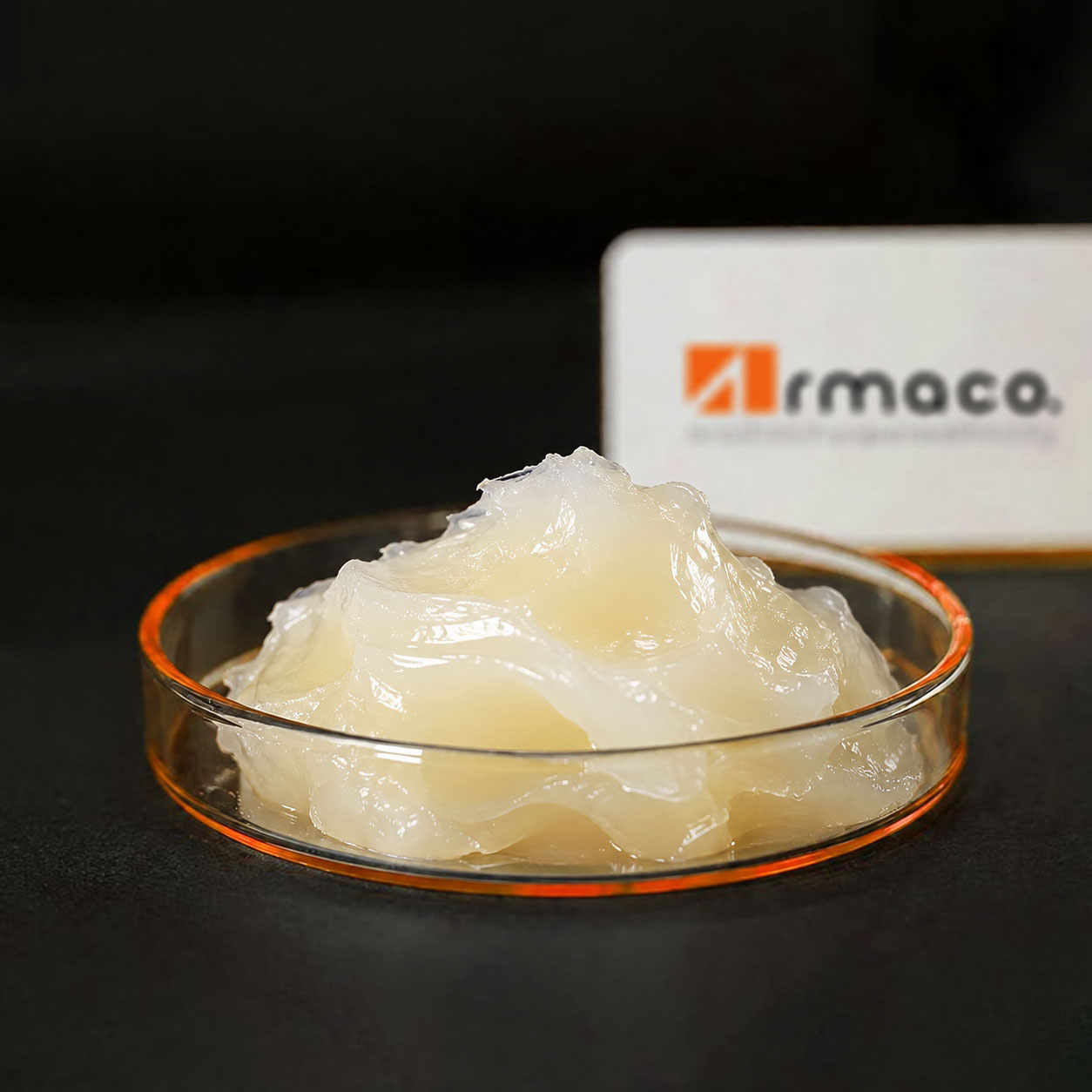
petroleum jelly, also known as industrial petrolatum, is a semi-solid hydrocarbon mixture containing oily and waxy components. Its properties depend on its composition and production process. The term industrial grade does not replace the technical specification of an individual product.
Understanding petroleum jelly in general is different from confirming that a particular grade is suitable for an application. For more on composition and grade categories, read What Is Petroleum Jelly? This page focuses on industrial applications and purchasing criteria.
The applications below relate to the petrolatum family. Select each grade according to its specification, process requirements and performance under actual operating conditions.
Petrolatum is used in some protective coatings and corrosion-prevention compounds. Its oily film can reduce contact between the surface and moisture. The duration and effectiveness of protection depend on the environment, surface preparation and continuity of the coating. Application methods and limitations are discussed in Protecting Metals with Petroleum Jelly .
Some grades are used in lubricant formulations or industrial coatings. The name petroleum jelly does not confirm suitability for every machine. Where components have specific lubrication requirements, match the material to the equipment instructions and actual operating conditions.
Petrolatum is used in products such as polishes and metal-finishing compounds, as well as some polymer processes. Consistency, dispersion, thermal behaviour and its effect on the finished product are important. Before purchasing in bulk for a new formulation, assess compatibility and test performance.
This table is a grade-selection checklist, not an analysis of an Arash Mahya product. When comparing quotations, confirm the test name, measurement method and test conditions.
Parameter | Why It Matters | Information to Check |
Appearance, Colour and Odour | Uniform appearance within the buyer's acceptable range | A clear description in the agreed specification |
Consistency or Penetration | Handling, spreading and behaviour during use | Test method and measurement temperature |
Thermal Properties | Behaviour when heated during processing | Test type and result for the specific grade |
Viscosity, Where Required | Comparison of flow behaviour under defined conditions | Measured value, unit and test temperature |
Uniformity and Oil Separation | Consistency of texture and performance in use | Evaluation conditions and acceptance limit |
Identification and Traceability | Matching the shipment to the accepted order | Grade name, batch number and supporting documents |
Review the Technical Data Sheet (TDS) for declared technical specifications, the Certificate of Analysis (COA) for reported results for the relevant shipment or batch, and the Safety Data Sheet (SDS) for safety and handling information. When ordering, clarify which documents your application requires and which can be supplied with the product.
White or yellow colour alone does not determine the grade of petroleum jelly. For industrial use, the main criterion is whether the specifications meet the required technical performance. Cosmetic, personal care and pharmaceutical applications also involve purity, safety and compliance requirements specific to the intended use.
If you are buying material for a skin-contact product or pharmaceutical use, do not rely solely on the description “petroleum jelly” or its light colour. Confirm the exact grade, claimed standard and supporting documents before purchase. “Bulk” and “drum-packed” describe the supply format; they do not establish whether the product is an industrial, cosmetic or pharmaceutical grade.
When requesting a quotation, explain the role of petroleum jelly in your process as well as the quantity required. For example, specify whether it will coat a component or form part of a formulation, which surfaces or materials it will contact, and whether cleaning or further processing will follow.
Before finalising your order, confirm the following in your enquiry or pro forma invoice:
1. Intended application, operating conditions and essential grade requirements.
2. Technical specifications, available documentation and shipment acceptance criteria.
3. Order quantity, net weight, container type and delivery arrangements.
4. Price, quotation validity and stated supply lead time.
5. Whether sample evaluation is required and can be arranged before a bulk purchase.
For more on production and the factors affecting product uniformity, read How Petroleum Jelly Is Produced as a companion to this buying guide.
Compare petroleum jelly quotations on the same specification and delivery basis. Differences in grade, order quantity, packaging, net weight and freight charges can change the comparison between two apparently similar prices.
State the quantity required with a clear unit of measure and give your delivery destination in Tanzania or South Africa. Check what the quoted price includes, how freight is calculated and when the quotation expires. A lower price alone is not enough to choose a supplier without comparing specifications and the total delivered cost.
The packaging type and weight must be specified in the quotation for your order. Containers should suit the product and unloading method and allow the shipment to be identified. Before confirming the order, check the quantity per package, number of packages and total net weight.
For export enquiries to Tanzania or South Africa, state the country and delivery location, quantity required and expected documentation. A supplier’s export experience does not replace agreement on packaging, supply lead time and shipping terms for your specific shipment.
Check the storage and handling instructions and Safety Data Sheet for the grade you purchase. Keep containers closed and protected from contamination, and use clean tools to remove the product. If your process requires heating, determine the operating temperature and equipment from the product instructions; one general temperature cannot be applied to every grade.
No. Colour describes appearance. Check the product’s own specifications and documentation to establish its grade and suitability for your intended use.
Do not substitute materials solely because they look similar. Match the material specifications to the equipment’s lubrication requirements.
Provide your intended application, required specifications, order quantity, preferred packaging and delivery destination. If you already use a specific grade, its reference specification is also helpful.
Confirm available order quantities and packaging with the sales team and have them specified in the quotation for your order.
Choose a grade whose specifications match your application and order requirements. To enquire about petroleum jelly from Arash Mahya, send your intended use, required quantity and delivery destination through our Contact us page or call our head office.
Head office telephone: +98 21 4611 0106
Email: info@arashmahya.com
The difference lies in the specifications, degree of refining and requirements of the intended application. Industrial grades are selected for technical uses and should not be used on skin or in personal care products without documented confirmation of suitability. Check the grade designation and supporting documents; appearance alone is not enough.