
Practical guide to surface preparation, coating application and selecting the appropriate temporary protection method
Industrial Vaseline can reduce the contact of the metal surface with moisture, oxygen and environmental contaminants by forming a greasy and hydrophobic film. This method is most suitable for temporary protection of parts in warehouse, during transportation, equipment shutdown or spare parts storage. The final result does not depend only on the product itself; the cleanliness and dryness of the surface, the continuity of the film, the environmental conditions and periodic inspection also directly affect the performance of the coating.
To learn about the structure of petrolatum, the types of grades, and the difference between industrial Vaseline and human samples, read the article What Is Vaseline? Read on. This article focuses exclusively on the use of industrial petroleum jelly in protecting metal surfaces and parts.
Decision summary: Industrial Vaseline is a good option for clean, dry parts, temporary protection, indoor storage, and coatings that need to be cleaned later. For harsh outdoor environments, salty environments, high temperatures, frequent washing, or permanent protection, a more specialized anti-corrosion system should be used. |
How does industrial Vaseline protect metal from corrosion?
Corrosion occurs when a metal surface reacts with a corrosive environment. In iron and steel, the product of this reaction is usually rust; in metals such as aluminum and copper, oxides and other corrosion products are formed. A continuous film of petroleum jelly acts as a physical barrier, making it more difficult for water, oxygen, and some contaminants to reach the surface. Corrosion-specific sources also attribute the effect of organic coatings primarily to limiting the transfer of moisture and oxygen.
Vaseline is not a rust remover and will not reverse existing corrosion. If loose rust, salt, moisture, or shavings remain beneath the coating, corrosion activity can continue. Therefore, applying a coating to a contaminated surface will only hide the problem and not provide reliable protection.
What parts is Vaseline suitable for protecting?
The most suitable application is temporary protection of parts that must be reassembled or serviced after a period of storage, and the coating can be removed.
Suitable items
- Bolts, nuts, fittings, tools, and machined parts in covered storage;
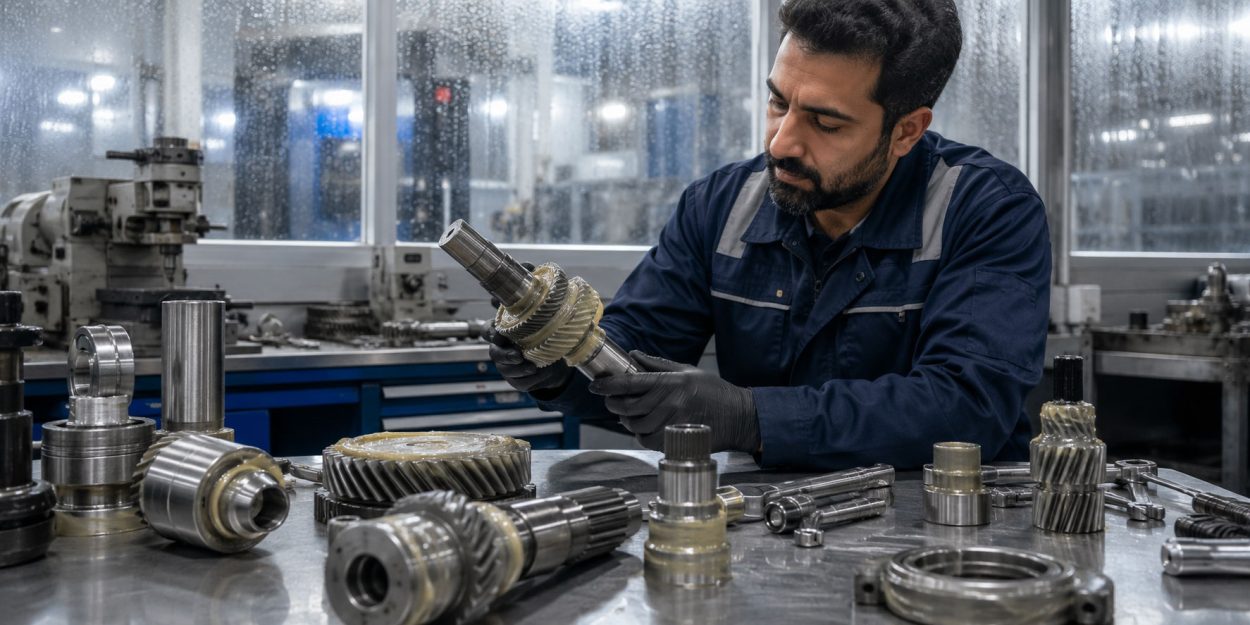
- Shafts, gears, dies, and spare parts that are out of service for a period of time;
- Metal surfaces in short-term transport or controlled packaging;
- Parts that require a greasy, soft, removable coating before assembly.
Conditions requiring further investigation
- Outdoor, coastal environment, salt fog or direct contact with rain;
- Hot parts or surfaces whose temperature can soften and flow the coating;
- Painted, plated surfaces, rubbers or sensitive polymers;
- Parts with very tight tolerances, electrical paths, or areas where grease retention is a problem.
How to use industrial Vaseline on metal surfaces
The quality of execution is as important as the product selection. In protective coatings, the material, surface preparation, and application method are the three main factors in performance.
1. Remove rust and loose dirt
First, check the surface condition. Rust flakes, swarf, dust, salt, machining fluid residue, and corrosive contaminants should be removed. Active rust may require brushing, controlled abrasion, or a preparation method appropriate to the part. The goal is to achieve a stable surface; not to cover the corrosion with a greasy film.
2. Clean and dry the surface completely.
Degreasing or washing should be done with a substance that will not damage the metal and adjacent coatings. After cleaning, the surface should be completely dry, as water or salt solution trapped under the petroleum jelly film can reduce the protective performance. Solvent residue may also change the consistency and adhesion of the coating.
3. Create a thin, continuous, and uniform film
For limited parts, a lint-free cloth, pad, brush or spatula can be used. In industrial lines, dipping or hot application is only appropriate when the temperature and working method are controlled according to the technical instructions. A very thick layer does not necessarily provide more protection; it is more important that edges, grooves, threads and hidden points are covered without gaps.

4. Package the part and inspect it periodically.
After coating, contact of the part with dust, water and abrasion should be limited. Simple packaging, suitable paper or film and storage in dry storage can prevent movement and contamination of the coating. The date of application, product batch number and inspection time should be recorded. During long-term storage, film continuity, oiling, coating shrinkage at the bottom and signs of corrosion should be checked.
What factors determine the duration of protection?
For industrial petroleum jelly, a fixed, general life cannot be stated without testing. Relative humidity, salt contamination, temperature fluctuations, mechanical contact, outdoor or indoor use, quality of surface preparation, film thickness and continuity, grade formulation, and type of packaging all play a role. ASTM D1748 is used to compare the relative performance of metal protective materials in a humidity chamber, but the standard itself emphasizes that results should be compared for similar products and applications, and that actual service experience is still essential.
Technical note: Statements such as “six-month protection” or “all-weather” can only be used when they are for a specific grade, thickness, defined preparation, and documented test or service conditions. |
Advantages and limitations of Vaseline in metal protection
The most important advantage of industrial petroleum jelly is that it forms a soft, sticky, and removable film. It spreads over irregular surfaces and threads, is easy to apply by hand, and is suitable for parts that will need to be cleaned later. In contrast, the coating may attract dust, soften in heat, be removed by contact or washing, and may not be sufficient on its own for harsh environments.
Method | The nature of protection | Main advantage | Main limitation |
Industrial Vaseline | Temporary and removable | Sticky film and simple implementation | Dust absorption and limitation in heat/open space |
Anti-rust oil | Temporary with thin film | Fast coating of multiple parts | Possibility of fluidity or thinner coating |
Protective grease | Temporary, thicker | Greater mechanical durability | More difficult to clean |
Permanent paint or coating | Long-term | Longer service life | Requires specialized preparation and execution |
Galvanized/Metallic Coating | Industrial long-term | More sustainable protection | Different cost and process |
When is Vaseline not a good choice?
- When permanent or multi-year outdoor protection is required;
- When the surface is constantly in contact with rain, water, steam, salt or detergent;
- When the part is under high load, speed, or temperature and requires specialized lubricant;
- When the surface must be painted, welded, glued or plated without a degreasing step;
- When specifications for the food, pharmaceutical, or human contact industries are involved; industrial grade is not approved for these uses;
- When compatibility with adjacent paint, plating, rubber or polymer is not specified.
How to remove Vaseline from metal surfaces?
First, remove excess with a non-abrasive spatula or cloth. Then use a degreaser or cleaner that is compatible with the metal, the surface coating, and the subsequent process. After washing, the surface is rinsed or cleaned and thoroughly dried. Before painting, welding, gluing, or plating, the surface cleanliness must be controlled according to the requirements of the process itself, as the remaining oil film can reduce adhesion and bond quality.
Common mistakes when using
- Applying Vaseline to a wet or contaminated surface;
- Covering active alarm without preparation;
- Creating a thick but discontinuous layer and placing edges and grooves;
- Placing the coated piece outdoors without additional packaging;
- Declaration of protection period without testing and without considering the environment;
- Use on hot or moving parts without checking TDS;
- Painting or delicate assembly without completely removing the coating.
What specifications should be checked when choosing a grade?
Color or appearance alone is not enough to select a grade. Penetration, dropping point, oil separation, dispersibility, uniformity, particulate matter, storage stability, and compatibility with metal and adjacent materials should be checked. The TDS indicates the specification range, the SDS specifies safety and handling requirements, and the CoA reports the status of the batch delivered. For bulk orders, a sample should be tested on an actual part in near-service conditions.
To review the characteristics of the grade and the production process, see the article How to produce industrial Vaseline See also the specifications available on the page. Industrial Vaseline It can be checked.

Conclusion
Industrial Vaseline can be a practical and affordable option for temporary protection of metal parts during storage, transportation and downtime. The success of this method depends on a clean and dry surface, continuous film, proper grade selection, packaging and inspection. This coating does not remove existing rust and is not a substitute for specialized anti-corrosion systems for harsh environments, high temperatures or permanent protection.
Before purchasing in bulk, determine the environmental conditions, metal type, storage period, and cleaning process. To receive TDS, CoA, product samples, and check the appropriate grade, you can visit the page Contact us Contact Arash Mahya's sales department.