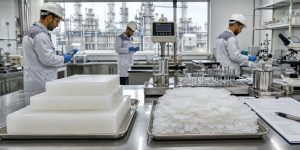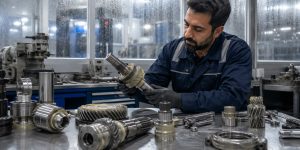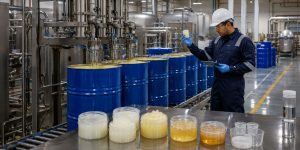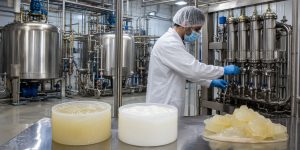

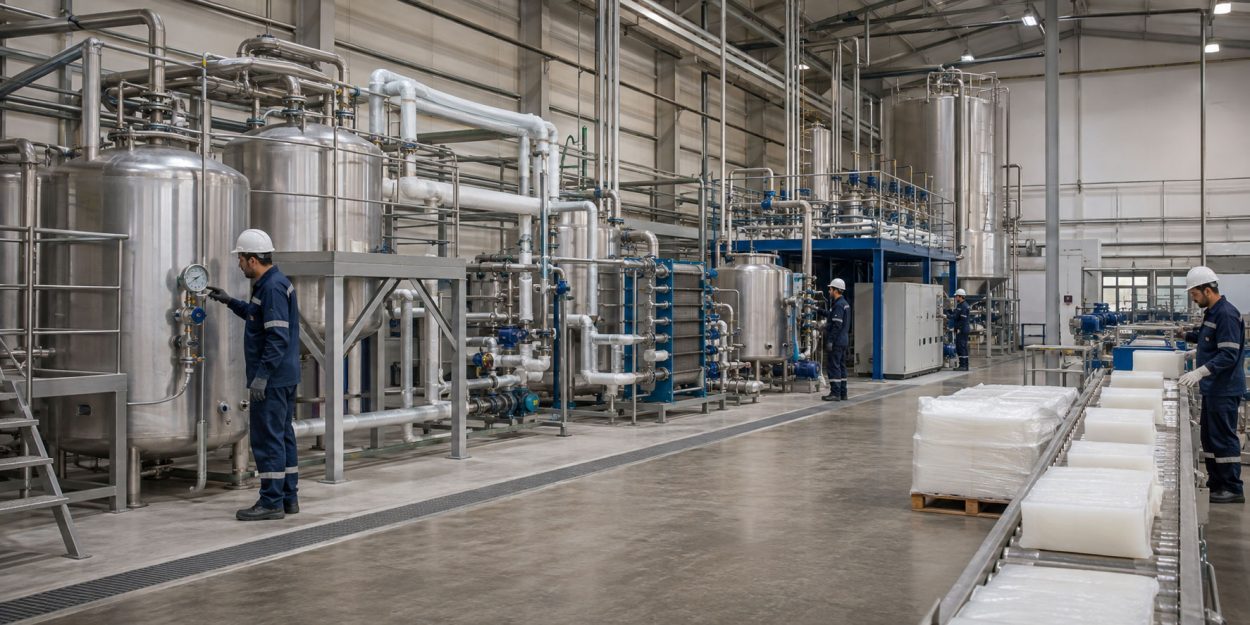
An industrial-scale paraffin wax production plant, contrary to what its name suggests, is usually not a single machine. To convert the wax feed into a product with a specified oil content, melting point, color, and properties, a series of tanks, heat exchangers, cooling equipment, separation units, purification systems, instrumentation, and packaging equipment work together. So when we talk about the selection or price of this equipment, we must consider the entire process path and the specifications of the final product at the same time.
At Arash Mahya, we look at this issue from an industrial production and quality control perspective. Experience working with waxy feeds shows that two lines with the same nominal capacity can have completely different outputs due to differences in feed, oiling method, level of purification and temperature control. In this guide, we examine the main components of the line, the role of each piece of equipment, selection criteria and factors affecting cost; without limiting the discussion to a general definition of "What Is Paraffin?» Or expand its consumer applications.
What is a paraffin production machine and why is it not a single "machine"?
In production Paraffin wax In petroleum, the goal is not simply to melt and mold a material. The feed must be prepared based on initial specifications, its oil fraction reduced to the target level, the crystal structure formed under controlled conditions, the solid and liquid phases separated, and if necessary, the color, odor, and impurities of the product also modified. Therefore, the term paraffin production machine is better understood as the general name of a process line, not the name of a standalone machine.
On the usual route, Slack Wax It is one of the important feedstocks for the production of harder and refined waxes. The quality and oil content of this feedstock have a direct impact on the load of the oiling unit, process time, energy consumption and output characteristics. For this reason, line design should start with feedstock analysis and definition of the target grade, not with the selection of a ready-made machine model.
If your goal is to understand the refining process itself, the article "Paraffin Production Process» Explains the process path in more detail. On this page, we focus on the equipment that performs those steps on an industrial scale.
Main components of paraffin production machine and industrial processing line
The exact layout of the paraffin production equipment depends on the technology chosen, but most industrial lines can be divided into several operational sections. It is important that each section be designed in harmony with the next; bottlenecks in cooling, filtration or transfer can make the actual capacity of the entire line lower than the nominal capacity of the equipment.
1. Feed receiving, melting and preparation tanks
The waxy feed must be kept uniform and within a controllable temperature range before entering the separation stages. Tanks equipped with heating systems, agitators if required, proper insulation, level control and heated transfer paths are part of this step. The aim is to ensure that the feed enters the next unit in stable conditions and to prevent fluctuations due to local cooling or settling.
2. Oil extraction and oil percentage control system
Deoiling is one of the crucial steps in the production line. Paraffin wax In this step, a portion of the oil along with the wax is separated from the crystalline phase to bring the product oil percentage to the target range. Depending on the technology, this can be done by thermally controlled processes, solvents, or a combination of methods. The design of this section is directly related to the specifications Slack Wax, Expected quality and production capacity depend.
In solvent-based lines, it is not just a mixing tank; mixing equipment, cooling, solvent separation and recovery, vapor control, and safety requirements also enter into the design. Therefore, comparing two technical proposals based solely on “tons per day capacity” does not give a complete picture of the level of equipment and the true cost of the project.
3. Cooling and crystallization equipment
For effective separation of oil from wax, crystal formation must occur within a controlled temperature profile. The rate of temperature drop, final temperature, residence time, and uniformity of heat transfer can alter the size and behavior of the crystals. On an industrial scale, process-specific heat exchangers and cooling systems are used, and the selection of the heat exchange surface must be coordinated with the flow rate and feed properties.
4. Filtration and phase separation
After crystallization, separation of the solid phase from the liquid phase becomes important. The type of filter or separation system should be selected based on the nature of the slurry, crystal size, viscosity, operating temperature, and design capacity. Performance loss in this section usually results in reduced production rates, increased cycle times, or more oil remaining in the product; therefore, filtration is one of the points that should not be underestimated in the design of paraffin production line equipment.
5. Color and odor purification and improvement unit
The product obtained from oil extraction is not necessarily the same as the final marketable grade. Depending on the target market, additional steps may be required to improve color, odor, stability, or reduce certain impurities. The type of purification unit should be defined based on the actual specifications of the target product. Adding purification equipment without clear technical specifications increases investment and operating costs; removing it may also remove the product from the desired grade.
6. Product storage, transfer and process control
In the transfer section, keeping the path warm, selecting the right pump, controlling the temperature, and avoiding cold spots are of great importance. At the same time, accurate instrumentation for measuring temperature, pressure, level, and in some cases flow rate, allows the operator to keep the process conditions stable. In an industrial line, automation is not just about reducing manpower; data recording and repeatability of production conditions are an important part of quality control.
7. Shaping and packaging the final product
Once specifications are approved, the paraffin can be prepared in slabs, blocks, granules or other forms to suit the target market. The selection of packaging equipment should be in accordance with the line capacity, the appropriate discharge temperature, the unit weight of the package and the transport requirements. For specifications and criteria for selecting the final product, see page "Paraffin wax» Provides you with additional information.
What effect does each section of the paraffin production line have on product quality?
Paraffin quality is not the result of the performance of a particular machine; it is the result of a chain of process decisions. If the feed is unstable, careful cooling alone will not solve the problem. If proper crystal formation occurs but separation is poor, the oil content of the product will remain high. If oil extraction is adequate but the product is not properly treated or stored, color and appearance or quality consistency will suffer.
| Stage | Main equipment or system | Operational goal | Effect on the product |
| Food preparation | Tank, heating and transfer | Uniformity of input conditions | Process stability and reduced fluctuation |
| Oiling | Deoiling System | Oil reduction with wax | Control of oil percentage and hardness |
| Cooling | Converter and crystallization system | Controlled crystal formation | Improved separation capability |
| Separation | Filter or separator | Solid and liquid separation | Direct effect on purity and yield |
| Purification | Refining/purification unit | Correcting color, odor, or impurities | Reaching the target grade |
| Quality control | Sampling and laboratory | Confirming the specifications of each batch | Repeatability and stability of supply |
| Packaging | Molding/Filling/Granulation | Preparing for transport | Shape and uniformity of supply |
How does the production method affect paraffin production equipment?
One reason why a fixed list of machinery cannot be provided for all projects is the difference in process method. In some lines, thermal control and stage separation play a greater role; in others, solvent processes are used to achieve lower oil content or a specific quality. Each choice creates different utilities, safety levels, investment and operational complexity.
Thermal control or Sweating based line
In thermal processes, precise control of temperature and heating or cooling rate is particularly important. A potential advantage of this approach is the reduction in the complexity of solvent-related equipment; however, capacity, cycle time, and ability to achieve product specifications must be evaluated based on the actual feed. It cannot be concluded that a line is more economical or suitable for any grade simply by eliminating solvent.
Solvent-based Deoiling Line
In the solvent process, the solvent helps control the crystallization and separation behavior, but in return, more equipment is required for mixing, cooling, filtration, solvent recovery, and safety control. In industry technical sources, solvent deoiling is used to convert slack wax to a wax with less oil, and the unit design is based on the feed properties and product specifications. For a B2B project, this difference should be seen in the CAPEX, OPEX, safety, and maintainability considerations.
What specifications should be defined when choosing a paraffin production machine?
Before requesting a quote, it is best to prepare a preliminary specification. This will allow technical offers to be compared and avoid purchasing equipment that only has the right capacity on paper. The minimum data that should be specified are:
- The type of feed and its range of variation; especially oil percentage, melting point, and physical properties Slack Wax.
- Target product grade and acceptable ranges of oil percentage, color, melting point, and other quality control indicators.
- The actual capacity required in terms of net production, not just the instantaneous capacity of a piece of equipment.
- The desired process method and site constraints in terms of solvent, energy, cooling water, and steam.
- Batch or Continuous operation type in different sections and number of annual working hours.
- Level of automation, data logging, alarms, and sampling points required.
- Final product format and packaging, storage, and shipping requirements.
- Installation space limitations, maintenance access, safety requirements, and possible future capacity expansion.
From the manufacturer's perspective, the most important thing is to define the product grade before purchasing the equipment. Phrases like "white paraffin" or "export paraffin" are not sufficient for line engineering. Measurable specifications must be the basis for the design, performance testing, and delivery of the equipment.
What factors does the price of a paraffin production machine depend on?
The price of a paraffin production machine cannot be converted into a valid number without defining the capacity, feed, technology and output quality. Two lines with apparently similar capacity may differ greatly in terms of the number of operating units, construction materials, automation level, recycling system, safety equipment and construction quality. For this reason, a professional inquiry should be made based on the scope of supply and common specifications.
- Nominal capacity and guaranteed net capacity of the paraffin production line.
- Type and fluctuation of feed and amount of pretreatment required.
- Oil extraction method and the need or lack of a solvent and solvent recovery circuit.
- Number of cooling, filtration and purification stages.
- Equipment materials, insulation levels, and construction quality of tanks and transmission lines.
- Instrumentation level, PLC/DCS, data logging and automatic control.
- Required utilities and ancillary equipment such as heating, cooling, vacuum or instrumentation air systems.
- Cost of installation, commissioning, training, spare parts and performance guarantee.
Don’t just look at CAPEX in the economic assessment. Energy consumption, potential solvent, downtime for cleaning and maintenance, filter life, recycling efficiency and off-spec rates also affect OPEX. A cheaper line to purchase may end up costing more in the operating period.
Common mistakes in designing and purchasing paraffin production line equipment
A significant portion of operational problems start not with equipment failure, but with incomplete project definition. Production experience shows that a few errors are more common than others:
- Equipment selection based only on nominal capacity, without considering feed and process bottlenecks.
- Assumption of constancy Slack Wax and ignoring changes in oil percentage or thermal behavior of the feed.
- Focusing on the apparent whiteness of the product without defining oil percentage, melting point, and measurable indicators.
- Reducing the cooling or filtration capacity relative to the capacity of tanks and other parts.
- Eliminate sampling points and instrumentation to reduce initial cost.
- Missing cleaning, maintenance, operator access, and scheduled downtime requirements.
- Purchasing a line without defining performance testing and product acceptance criteria during commissioning.
To reduce these risks, it is better to design from the target product to the equipment: first the paraffin specifications, then the feed and process, and finally the machinery. This arrangement in practice makes it much easier to compare proposals and control line performance.
Arash Mahya's production experience regarding equipment selection and process control
In industrial wax production, one principle always shows itself: consistent quality is not built with a single piece of equipment. Feed stability, temperature control, operation scheduling, separation performance, purification quality, and product testing must be integrated into a coherent system. That’s why at Arash Mahya, when analyzing a line or process problem, we don’t just look at the name of the device; we examine the relationship between the steps and the quality control data.
If the goal is to produce several different grades, line flexibility also becomes important. The equipment must allow key parameters to vary within safe and repeatable limits, and the product of each batch must be verified by sampling and testing. In such situations, recording production data is as valuable as the mechanical capacity of the equipment, as it allows the root cause of quality fluctuations to be traced.
Ultimately, choosing the right paraffin production equipment is a balance between target quality, capacity, operability, energy cost, safety, and maintainability. If any of these variables are overlooked from the start, it is usually more costly to correct after installation.
Conclusion: When choosing a paraffin production line, the process is more important than the name of the machine.
A paraffin production plant should be viewed as a process system that continues from feed preparation to oiling, cooling, separation, purification, quality control and packaging. The type and number of equipment makes sense when the feed and the specifications of the final product are predefined. Therefore, nominal capacity alone is not a suitable criterion for comparing lines; efficiency, guaranteed quality, utility consumption, safety, maintainability and operating costs should also be considered at the same time.
If you are developing a project specification, we recommend that you first specify the feedstock, target grade, and net capacity, and then ask the equipment supplier for the process flow, scope of supply, energy consumption, and performance test criteria. This approach reduces the likelihood of making the wrong choice and creates a more realistic picture of the investment.
Frequently asked questions about paraffin production machine
Is only one machine needed to produce paraffin?
No. On an industrial scale, a combination of tanks, heating and cooling equipment, oiling systems, separation units, filtration, instrumentation, and packaging are usually required. The number and type of equipment depends on the feedstock and product grade.
What is the raw material of the solid paraffin production line?
In one of the common routes for producing petroleum wax, Slack Wax It enters the oiling and refining process as an intermediate feed. The feed characteristics, especially the oil percentage and thermal behavior, affect the design and performance of the line.
Are solid paraffin and liquid paraffin equipment the same?
No. The nature of the product, feedstock, and operations required vary. This article specifically focuses on production and processing equipment. Paraffin wax It focuses on oil and should not be considered a plan for liquid paraffin equipment.
How is the capacity of a paraffin production line determined?
Capacity should be determined based on net production required, operating hours, cycle time, separation efficiency, wash and repair stops, and line bottleneck capacity. The capacity of a tank or a piece of equipment alone is not the actual capacity of the line.
Can one line produce multiple grades of paraffin?
In some designs, yes, but only if the feed range, process flexibility, temperature control, separation, and purification are provided for the target grades. Changing grades without parameter control can reduce quality repeatability.
What information should be sent to inquire about the price of the line?
At a minimum, the feed type and analysis, net capacity, oil percentage and melting point of the target product, desired process method, level of automation, packaging form, available utilities and scope of supply must be specified so that technical and financial proposals can be compared.