
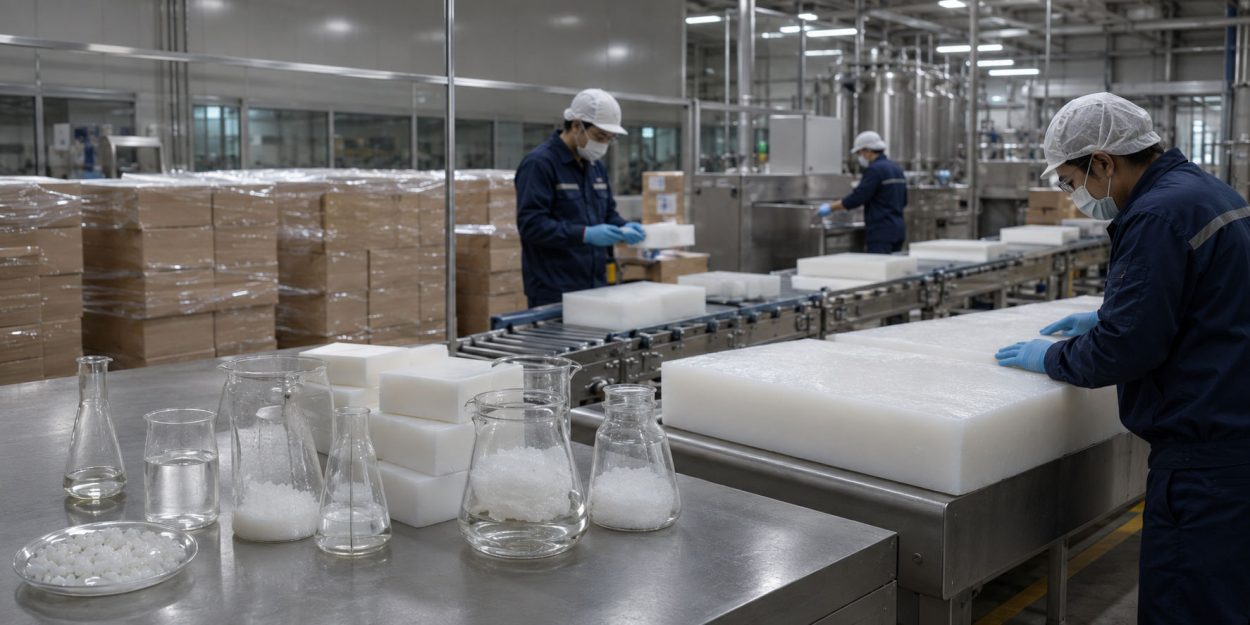
Specialized guide to the process of refining, oiling, purifying, and quality control of paraffin
The way in which paraffin waxes are produced depends on the type of final product and the feedstock specifications. In the conventional process for producing solid petroleum paraffin wax, heavy oil fractions are first processed in a refinery dewaxing unit to produce an oily substance called slack wax. Slack wax is not yet the final product, as it retains some of the base oil, colorants, and low-melting materials. To convert this feedstock into marketable paraffin wax, the steps of deoiling, controlled cooling, crystallization, filtration, and further refining must be performed.
In contrast, the production route for liquid paraffin is not the same as for paraffin wax. Liquid paraffin or white oil is produced from refined oil streams and the main goal is to achieve a clear, colorless, odorless liquid that meets industrial or sanitary grade requirements. Therefore, in this guide, we will first examine the process of producing solid paraffin from slack wax and then explain how it differs from liquid paraffin production.
What is paraffin made from?
To understand the process correctly, it is necessary to distinguish between crude oil, waxy oil cut, slack wax and final paraffin. Crude oil is separated into different cuts in distillation towers. A portion of the heavier cuts are sent to oil refining units to produce base oil. These cuts contain hydrocarbons that crystallize at low temperatures and can impair the performance of the lubricating oil; for this reason, they are separated from the oil stream in the dewaxing step.
The separated wax product, usually Slack Wax Slack wax is a mixture of waxy hydrocarbons and some oil, and its oil percentage varies depending on the type of feed and dewaxing conditions. This material is the main feedstock for many production lines. Paraffin wax The more uniform the feed quality and the better controlled the oil and impurities content, the more consistent the final grade will be.
In this article, solid paraffin refers to petroleum paraffin wax. To learn more about the definition, structure, and general classification of the product, you can read the guide What Is Paraffin? Read; but this page focuses only on how to produce paraffin types and the control points of the production line.
Overview of the solid paraffin production process
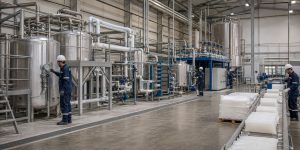
The industrial path of solid paraffin production can be summarized in this chain: receiving slack wax, melting and homogenizing the feed, oiling, cooling and crystallization, solid-liquid separation, oil or solvent recovery, color and odor purification, quality control, molding, and packaging.
These steps are not performed with exactly the same equipment configuration in all plants. The type of slack wax, production capacity, target oil percentage, required melting point, and level of purification determine whether sweating, solvent deoiling, static crystallization, or a combination of methods is used. However, the logic of the process is consistent: first, the oily and low-melting components are separated from the wax structure, and then the color, odor, and remaining impurities are reduced to product specification levels.
Step One: Receiving, Melting, and Preparing Slack Wax
Before oiling begins, the feed should be inspected for appearance, oil content, freezing or melting point, color, odor, water, and foreign particles. Two batches of slack wax with the same brand name may not behave the same on the production line because their hydrocarbon distribution, oil-to-wax ratio, and thermal history are different.
Solid or semi-solid slack wax is melted in the heating tank. The goal of this step is not just to liquefy the feed; the temperature must be high enough to ensure a completely uniform flow, without excessive heating causing increased energy consumption, discoloration, or unnecessary oxidation. After melting, the feed passes through primary filters to prevent mechanical particles and possible contaminants from entering subsequent sensitive equipment.
In professional lines, the characteristics of each batch are recorded and the cooling and oiling program is adjusted to suit that feed. This initial control is one of the most important differences between sustainable industrial production and production that focuses only on the appearance of the product.
Step Two: How is Slack Wax Oiling Done?
Deoiling is the step that has the greatest impact on the oil content, hardness, clarity, melting point and consumption behavior of paraffin wax. The goal is to form the waxy fraction as separable crystals, leaving the oil components in the liquid phase. Two well-known routes for this are sweating and solvent deoiling.
Sweating method
In the sweating method, the slack wax mass is first cooled and solidified in a controlled manner. The temperature is then slowly increased. The oil and components with lower melting points liquefy more quickly and are removed from the wax crystal lattice. As the stepwise heating continues, the oil percentage decreases and the solid portion remains purer.
The main advantage of sweating is the relative simplicity of the equipment and the lack of the need for large volumes of solvent. In contrast, temperature and time control are very important, and achieving very low oil percentages may require several steps or long process times. If the temperature gradient is inappropriate, some of the valuable wax is removed with the oil or the oil remains trapped in the solid structure.
Solvent degreasing
In solvent extraction, molten slack wax is mixed with a suitable solvent or solvent mixture and then cooled according to a specific curve. The solvent reduces the viscosity of the stream, improves mass transfer, and helps to separate the wax crystals from the oil phase. After the formation of a crystalline slurry, the stream enters a filter; the wax cake remains on the filter surface and the oil-solvent solution passes through.
The wax cake may be washed with cold solvent to reduce residual oil. The solvent is then recovered from both the wax and oil streams and recycled. Solvent deoiling typically allows for more precise control of oil content and the production of low-oil grades, but requires solvent recovery equipment, safety controls, and careful temperature management.
Stage Three: Cooling, Crystallization, and Filtration
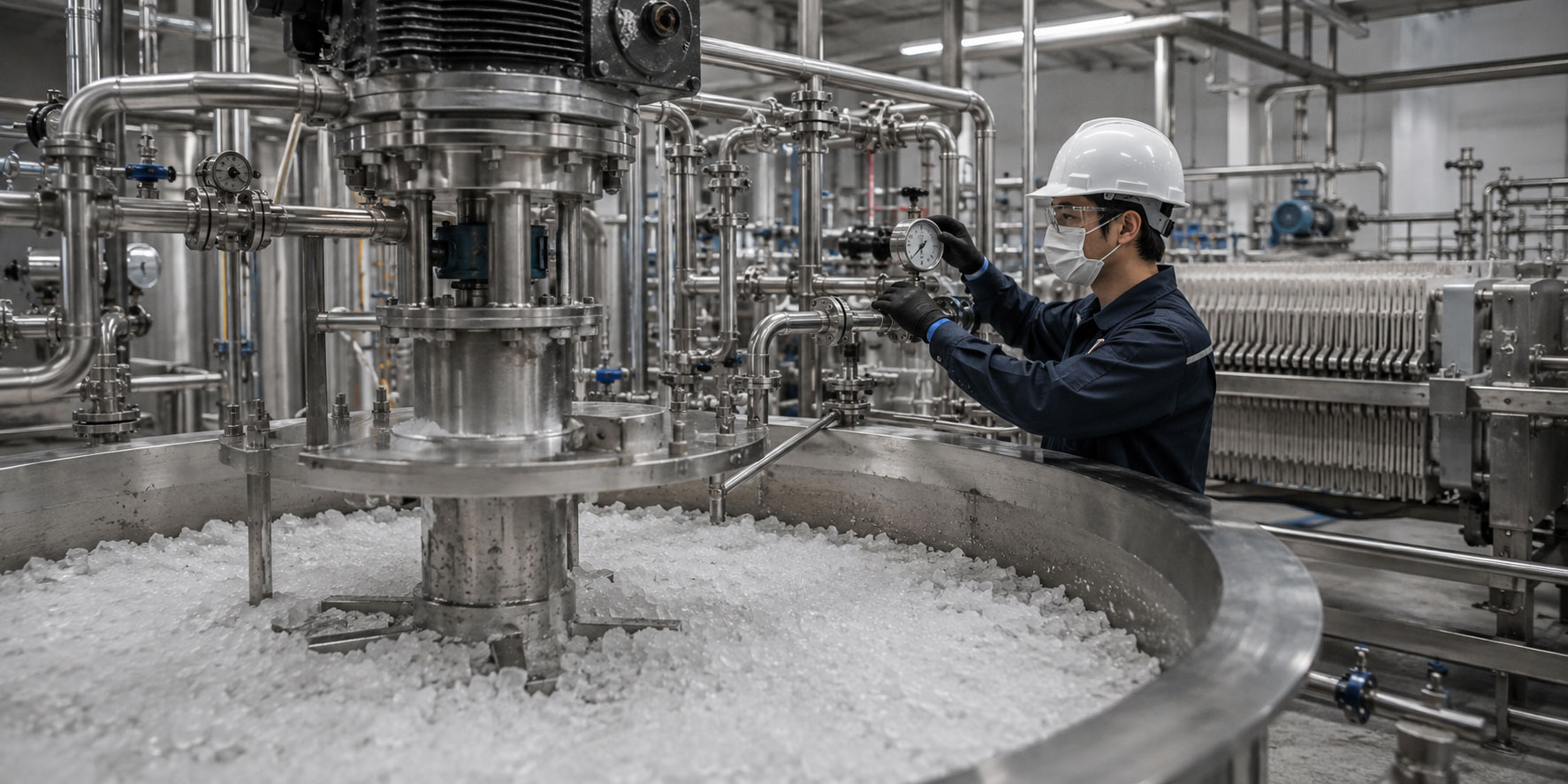
The quality of separation is not just dependent on how low the temperature is. The cooling rate, mixing, residence time, and feed composition determine the size and shape of the wax crystals. If cooling is done too quickly, small, compact crystals form, making it more difficult for the liquid to pass through the filter. If the process is too slow or unstable, production capacity is reduced and product uniformity is compromised.
After crystallization, the solid and liquid phases are separated by filter presses, rotary filters or equipment according to the plant design. The result of this step is two streams: a wax cake with less oil and an oil-rich liquid stream. The solvent or oil moisture remaining in the cake is removed by heating and recovery to prepare the wax for final purification.
At this point, the operator is not just looking at the white appearance of the cake. The filtration rate, pressure drop, cake thickness, crystal breakage rate, and the percentage of oil exiting are all indicators that indicate the correct state of the process.
At what stage is Foots Oil produced?
The oil stream separated from slack wax in the oiling stage is called, depending on the production method and factory specifications, by names such as separated oil or Foots Oil This stream is not the main product of the paraffin line; it is a mixture of oil, low-melting wax components, and some associated hydrocarbon materials.
The quantity and quality of footsoil depends on the percentage of initial slack wax oil, the separation temperature, the number of deoiling stages and the wax recovery rate. If the aim is only to reduce the oil percentage quickly and proper recovery control is not carried out, some of the saleable paraffin may enter the footsoil stream. Therefore, the efficiency assessment should focus on both the quality of the paraffin and the amount of wax lost.
Depending on the specifications, Foots Oil can be used as a feedstock or auxiliary in some industrial processes, but its use should be determined based on actual product analysis, not just the brand name.
Stage Four: Decolorization, Deodorization, and Final Purification
The degreased wax may still have a yellow color, a hydrocarbon odor, or traces of sulfur, nitrogen, and aromatic compounds. The final refining step is performed to improve the color, odor, stability, and compatibility of the product with the intended application. The technology used may include adsorption with decolorizing earth, post-filtration, hydrotreating, or a combination of these methods.
In absorption treatment, the molten wax is contacted with a suitable adsorbent to absorb some of the colorant and polar compounds. After a controlled contact time, the adsorbent is separated by filtration. The selection of the type and amount of adsorbent should be based on testing, because excessive consumption can cause product loss and increased waste in addition to cost.
In hydrofinishing, wax is subjected to controlled conditions in the presence of hydrogen and a catalyst. This process can improve color, odor, and stability and is used to produce highly refined waxes. Each plant selects the appropriate route based on its equipment and target grade; therefore, it is not possible to judge the production method or purity level simply by looking at the white color of the product.
How are semi-refined and fully refined paraffins formed?
The terms semi-refined and fully refined should be accompanied by technical specifications. Oil reduction, color improvement, and odor removal are key factors, but the exact boundaries of grades may vary based on buyer standards, target market, and application. That’s why the product analysis sheet is more important than the brand name.
Semi-refined paraffin usually has a higher oil content than the fully refined grade and is suitable for some industrial uses that are less sensitive to color and odor. Fully refined paraffin is produced by more thorough deoiling and additional refining and should have characteristics such as light color, low odor, good stability, and consistent specifications.
To choose between different percentages, the article Difference between 1% and 3% paraffin and guide What percentage of paraffin is good? They can help with application-based decisions. Low oil content alone does not always mean the best choice; melting point, permeability, mold type, burn rate, or the user's process needs should also be considered.
How is liquid paraffin produced?
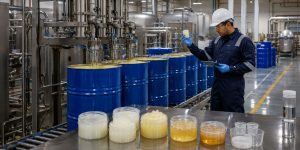
Production Liquid paraffin should not be considered a direct continuation of slack wax degreasing. This product is produced from mineral oil streams or, in some technologies, from highly paraffinic synthetic streams. The goal of the process is to remove or reduce aromatics, sulfur, nitrogen, colorants, reactive substances, and volatile components to produce a clear, stable liquid.
The refining route can include vacuum distillation, extraction, intensive hydrotreating and final filtration. The intensity of the refining is determined by the target grade. Industrial liquid paraffin is used for lubrication, technical formulations and general processes; while cosmetic, pharmaceutical or food grades must meet more stringent requirements and standards relevant to the target market.
Consequently, the similarity of the names of solid and liquid paraffin should not lead to the assumption that their production route, quality control indicators, or applications are the same.
Paraffin quality control after production
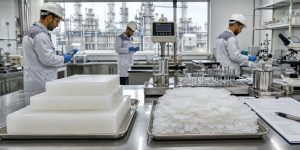
After refining, the product must be sampled and tested before molding and packaging. The set of tests is determined based on the grade and sales contract, but the following indicators are of great importance in evaluating petroleum paraffin:
- Oil percentage: To measure the amount of remaining oil components and control product grade.
- Melting point or freezing point: To check thermal behavior and suitability for the consumer's process.
- Color: To control uniformity and level of purification; usually measured by standard methods.
- Odor: Especially in applications where the product is used in a confined space, packaging, or sensitive formulations.
- Needle permeability or hardness: to compare the structure and mechanical behavior of wax.
- Melt viscosity: In some grades, it is important for pumping, mixing, and coating design.
- Appearance, moisture and foreign particles: To ensure cleanliness, uniformity and health of the product.
- Additional tests: Depending on the application, these may include stability, extractables, ultraviolet absorption, or hydrocarbon composition.
ASTM standards for petroleum waxes cover methods such as D721 for oil percentage, D87 for melting point, D938 for freezing point, D1321 for permeability, and D1833 for odor. Including the test method number on the analysis sheet increases the ability to compare results between the manufacturer and the purchaser.
What factors determine the quality of paraffin produced?
The final quality is not the result of a single step. The first factor is the quality of the slack wax; a feed with fluctuating oil content or high impurities makes it difficult to control the line. The second factor is the cooling curve and crystal formation. Improper crystal size can slow filtration or hold more oil in the cake.
The third factor is the method and intensity of oiling. Excessive and uneconomical oil reduction may reduce wax yield, while insufficient oiling causes softness, odor, or grade instability. The fourth factor is the quality of the final treatment; decolorization must be carried out without introducing adsorbent particles or creating high losses, and hydrotreating also requires careful control of operating conditions.
Finally, tanks, transfer lines, molds, and packaging must be clean and appropriate for the product temperature. Contamination of a batch of white paraffin with dark or oily product residue can undo the results of several refining steps at the last point.
Product molding, packaging and storage
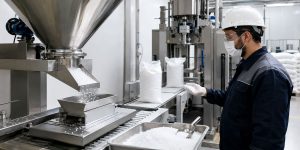
The refined paraffin is transferred to the final product tank after laboratory approval. The molten wax can be cooled and packaged into slabs, blocks, granules, or shapes required by the market. The cooling rate of the mold affects cracking, shrinkage, and appearance of the block; therefore, this step is also part of quality control, not just a packaging operation.
The packaging must prevent the ingress of dust, moisture and contamination. The product is stored in a dry environment, away from direct sunlight and heat sources. During long-term storage, improper arrangement or high temperatures can cause deformation of the blocks and damage to the package. The batch number and traceability must be maintained on the package or accompanying documents.
How to choose the right grade of paraffin?
The industrial customer should not base their selection solely on color or the phrase “fully refined.” First, the application, process temperature, acceptable oil percentage, melting point, hardness, color, odor, packaging form, and consumption volume should be determined. Then, the sample and analysis sheet should be checked against the actual conditions of the consumption line.
To understand product categories and areas of consumption, a guide Types of paraffin and its uses See. Arash Mahya sales and technical experts can recommend the appropriate grade based on the required specifications; To submit a request and receive product information from the page Contact us Use.

Summary of how to produce different types of paraffin
The production of paraffin waxes does not follow a single, simple path. In the production of solid paraffin wax, slack wax from the dewaxing of oil-bearing cuts is melted and homogenized; then oil is extracted by sweating, solvent, or crystallization methods. The wax crystals are separated from the oil phase by filtration, the remaining wax is refined to improve color, odor, and stability, and finally graded based on oil content, melting point, hardness, and other tests.
In liquid paraffin production, the path begins with refined oil streams and the goal is to achieve a clear, stable liquid with a purity level appropriate for the application. In both groups, the true quality of the product is the result of feed, process, laboratory and packaging controls; not just its white or clear appearance.