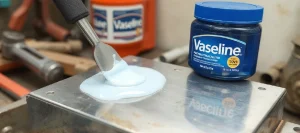


Industrial Vaseline is a substance obtained from the oil refining process and its main composition includes heavy hydrocarbons and mineral oils. To produce it, crude oil is first processed through vacuum distillation and then the residue is purified using various purification methods including absorption and filtration. Vaseline It becomes.
This substance, due to its special properties, is used in various industries and, as a substance with a semi-solid structure, plays an important role in many processes. Industrial Vaseline, in addition to being used in the cosmetics and health care industry, is also used in various industries such as pharmaceuticals, chemicals, and even automotive manufacturing.
Industrial Vaseline Production
Initially, it can be said that the production of industrial Vaseline begins with the refining process of crude oil. Crude oil is separated through low-pressure distillation to extract lighter compounds from it. The heavy residue, which is called mineral oils, is purified using methods such as absorption and filtration. These steps remove impurities and improve the purity of the final product.
Ultimately, a semi-solid substance with hydrocarbon properties is obtained and is known as Vaseline. This substance is used in various industries, including healthcare, pharmaceutical, chemical, and even automotive, due to its special properties such as its gel-like structure and low permeability.
What material is Vaseline made from?
Vaseline is made from a combination of mineral oils and natural waxes. It is obtained from the refining process of crude oil. First, the crude oil is distilled to separate the lighter compounds from it. The heavy residue, which contains heavy hydrocarbons, is converted into Vaseline through purification and absorption of impurities. This process makes Vaseline a semi-solid, jelly-like, odorless substance with protective and moisturizing properties for use in various industries, including skin and hair care, pharmaceuticals, and even other industries.
What is industrial Vaseline?
It is a type of petroleum jelly obtained by combining mineral oils and natural waxes. This substance is usually produced in the oil refining process and is used for non-sanitary and technical applications in various industries. Industrial Vaseline is usually in a semi-solid, jelly-like form that is used in various industries, including molding, casting, printing, and even as a lubricant in industrial machinery, due to its special properties, such as lubricating properties and resistance to high temperatures. This type of Vaseline is free of impurities and suitable for specialized applications due to its careful purification processes.
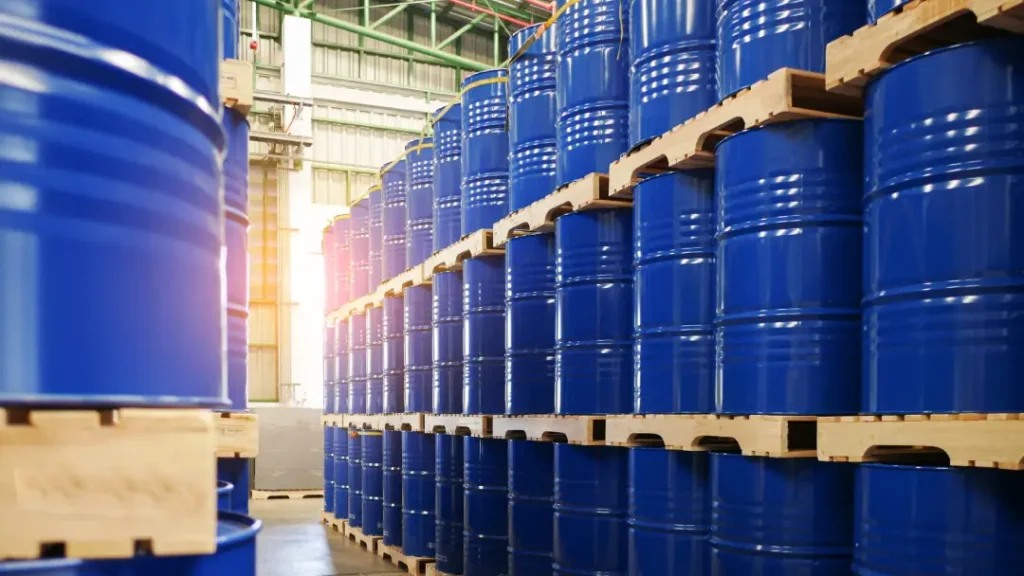
What are the uses of industrial Vaseline?
Industrial Vaseline, as its name suggests, is a type of functional material used in various industries, especially for technical and non-hygienic purposes. Due to its special properties, this material plays an important role in many industrial processes and is used in a variety of products.
1. Molding and casting industry:
In the molding process, industrial petroleum jelly is used as a lubricant. This substance helps mold parts to be easily removed from the mold without sticking to its surface. In casting, petroleum jelly is also used to prevent molten materials from sticking to the molds.
2. Printing industry:
Vaseline is used in the printing industry as an additive to ink. This substance increases the spreadability of the ink on the surface and helps improve the quality of the print. The use of Vaseline in this industry helps create a uniform and smooth layer of ink, which increases printing accuracy and greater clarity.
3. Automotive industry:
In the production of some automotive components, industrial petroleum jelly is used as a lubricant to prevent wear and tear on metal parts. It is particularly useful in protecting metal surfaces from corrosion and rust.
4. Protection of metal surfaces:
Industrial Vaseline is used as a protective coating for metal surfaces against atmospheric agents and moisture. This substance effectively prevents metals from coming into contact with water or air, helping to preserve and extend the life of metal parts.
5. Oil and gas industries:
In these industries, Vaseline is used as a lubricant and insulator to protect sensitive components such as pipes and equipment. Vaseline prevents damage to equipment exposed to harsh conditions and high temperatures.
6. Electronics industries:
In the manufacture of electrical and fiber optic cables, Vaseline is used as an insulator to prevent water and moisture from penetrating the cables. This property is essential to protect the optimal performance of electronic systems.
These applications show that industrial Vaseline plays very important roles in various industries, in addition to its health uses.
Physical and chemical properties of industrial petroleum jelly
Industrial Vaseline is a mixture of hydrocarbons that has specific physical and chemical properties that make it suitable for various industrial applications. Among the important properties of Vaseline is its melting point, which varies between 40 and 70 degrees Celsius, meaning that it becomes solid at low temperatures and liquid at higher temperatures. It also has high viscosity and does not flow easily, which makes it an ideal lubricant.
Chemically, Vaseline is resistant to oxidation and is not easily affected by chemical changes. This property makes it very suitable for protecting the surface of materials from moisture and corrosive chemicals. Also, Vaseline is insoluble in water, but it is soluble in some organic solvents such as benzene and chloroform. These properties allow industrial Vaseline to be used effectively in various industries including metal parts production, mold making, and even the pharmaceutical industry.
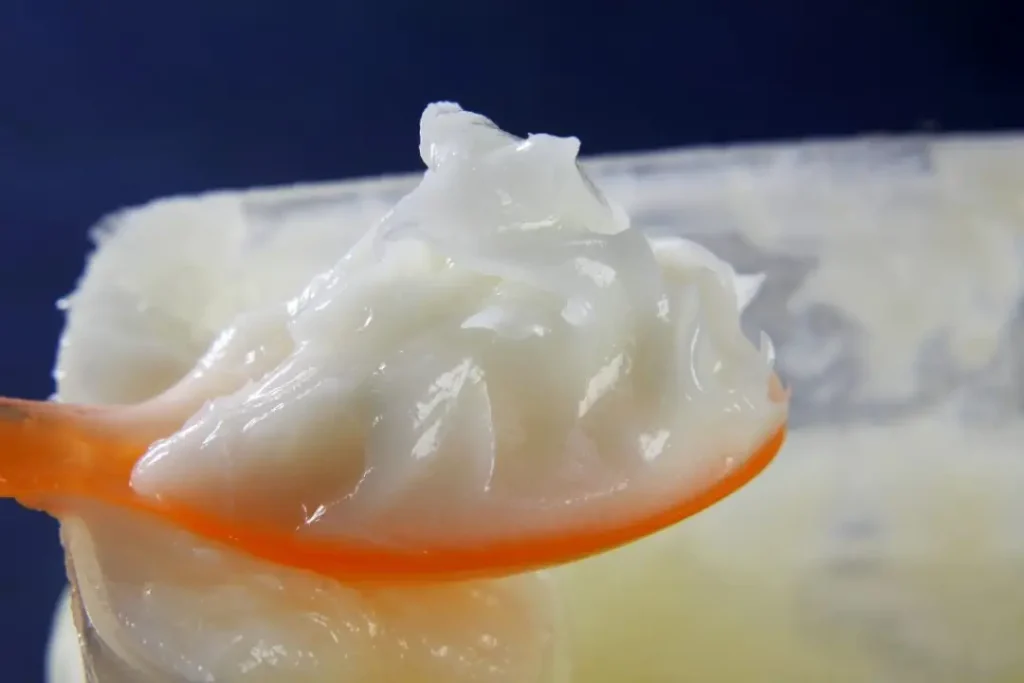
Examining the industrial Vaseline production method
This petroleum jelly is usually produced from petroleum refining processes. After the liquid hydrocarbons are extracted in a refinery, crude oil is converted into petroleum oils. These oils are then subjected to a vacuum distillation process to remove impurities and lighter compounds. After this step, the residue, which contains heavier compounds, is used to produce industrial petroleum jelly.
These materials are then processed through purification using adsorbents, filtration and aeration to reach their final form. In these steps, waxy compounds and other impurities are separated from this material, and high-quality petroleum jelly with desirable physical properties for industrial applications is obtained. The final product is a semi-solid gel without air bubbles, which is widely used in various industries.
Conclusion
Industrial Vaseline is a semi-solid, jelly-like substance obtained from oil refining and various purification processes. This product, with its specific physical and chemical properties, has various applications in various industries. These applications include use in the oil industry, foundry, production of health products, and also in some pharmaceutical and medical processes. Due to its unique properties and multiple functions, industrial Vaseline is one of the basic materials in many industrial products. To learn more about the production and consumption processes of this substance, you can visit the website Arash Mahya See.
Frequently Asked Questions
Industrial Vaseline is a type of petroleum jelly obtained in oil refining processes and is widely used in various industries for technical and protective applications.
This substance is obtained through the purification and distillation of crude oil and, through various processes such as removing impurities and purifying with absorbents, becomes semi-solid and gel-like and ready for consumption.
Industrial Vaseline is used in candlemaking, casting, and even printing ink production as a lubricant and preservative.
Industrial Vaseline is usually produced for industrial uses and may not be suitable for sensitive skin due to impurities, so for hygienic purposes it is better to use hygienic Vaseline.