
How to produce solid paraffin or paraffin wax
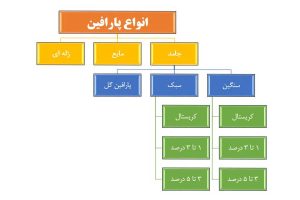
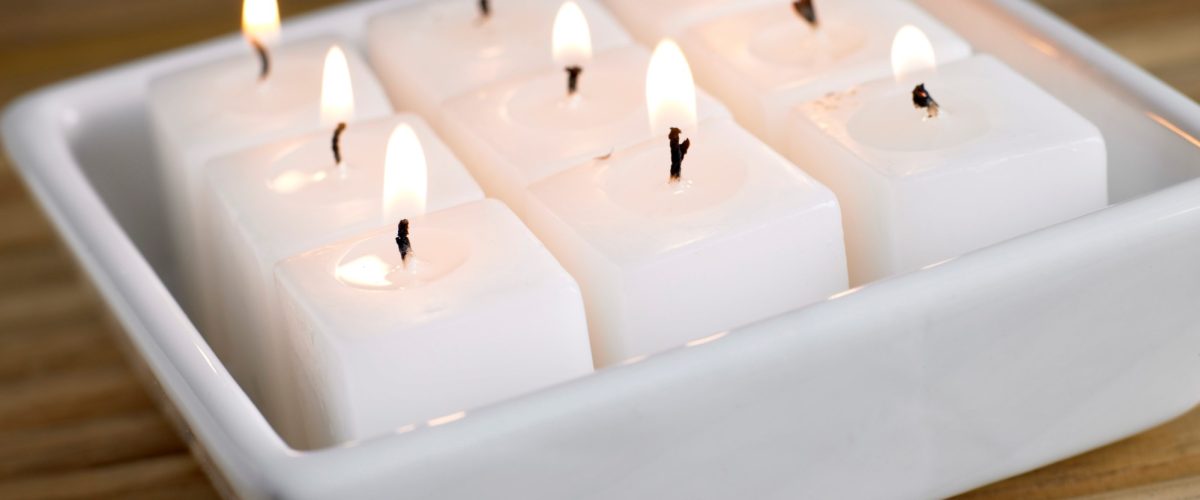
Paraffin It is a substance that is widely used in industries. This widely used substance is obtained from crude oil. There are different types of paraffin, including liquid and solid. Isoparaffin, slack wax, paraffin wax are examples of paraffins that are petroleum derivatives. From aircraft fuel to match production, paraffins are used in industrial production.
At room temperature or equilibrium, Paraffin It is completely soluble in crude oil. Changes in temperature and pressure will disrupt this equilibrium. The processes that cause this disruption in temperature and pressure cause paraffin to be produced. In principle, the solubility of solid paraffin or wax is very sensitive to temperature changes. For example, if the temperature of the pipe surface is below the cloud point (the cloud point is the temperature at which paraffin crystallizes in solution), solid paraffin with a high molecular weight will precipitate.
As a result, at lower temperatures (below the cloud point) of crude oil, solid paraffin crystals precipitate and adhere to surfaces through sediment collision. This adhesion occurs at low temperatures. On the other hand, mechanisms such as shear dispersion, Brownian diffusion, gravity, thermophoresis and turbophoresis help the paraffin molecule to deposit on the pipeline wall. The main factors that affect paraffin deposition in flow systems are: flow rate, temperature difference, cooling rate and also surface properties.
Paraffin distillation is achieved in three different processes. These processes are batch processes, continuous processes and tube processes. Paraffin distillation cannot occur in the cracking process because the hydrocarbons in the paraffin are chemically altered. The cracking process also creates a pyrolysis process, which makes it almost impossible to freeze the paraffin. For best efficiency, the naphthenic process is preferred to the cracking process in paraffin feedstocks.
The role of filter press in the paraffin distillation and cooling process
Paraffin oil compounds are distilled from oil at temperatures below about 860°F (460°C). This process can filter the oil in simple filter presses. In fractional crude oil, “raffinate” or cutting is defined as the process of distilling paraffins that boil at 170 to 310°C (338 to 590°F) and at very low pressure. This process can be cooled to separate the solid paraffin and liquid oil fractions. Simple filter presses perform this important task.
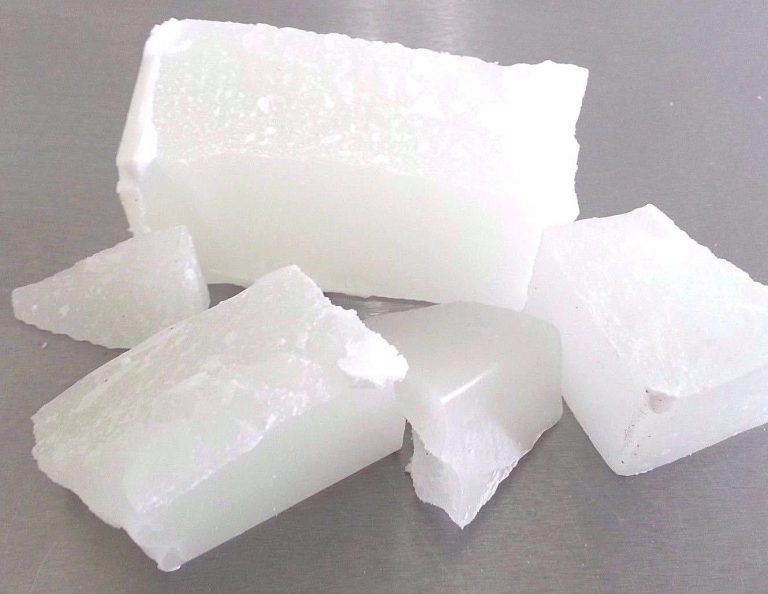
The solid fraction containing 65% paraffin is called slack wax. Slack wax is first heated and refined, then converted into the regular paraffin wax available on the market. Removing paraffin from pressable distilled paraffin is important to improve its lubricating properties and cold resistance. Therefore, in paraffin distillation processes, this product is usually sent to the silos Paraffin Paraffin silos are where paraffin is allowed to settle in tanks at room temperature. It is then pumped through a bank of paraffin cooling units to hydraulic presses. This process causes the paraffin to de-condense and cool.
Next steps in paraffin distillation
The next stages of paraffin distillation are obtained from the "crude" cut with a higher boiling point and are defined as the high viscosity fraction. This allows for the distillation of more unrefined paraffin. In addition, this fraction itself contains paraffin. However, due to its fine crystalline nature, this paraffin is not well suited for separation and filter pressing. A portion of the distilled paraffin with high viscosity is cold settled and centrifuged. This is why an oily paraffin fraction is obtained and is defined as petroleum and oil derivatives.
Crude oil is refined from the petroleum deposits or microcrystalline waxes present in crude oil. The refining process separates the paraffin from the naphtha solution by recrystallization and precipitation at reduced temperatures. This type of paraffin is sometimes called “petroleum paraffin.” At least 85 percent of the hydrocarbons in this product are of this type.
Analysis of the solid paraffin production process
(DSC) is defined as a derivative or differential that measures calorimetry. (Calorimetry is actually the measurement of calories contained in this class of petroleum products). This method is used to detect physical or chemical changes in a substance that are accompanied by the absorption or release of heat. If the initial mass of the sample is known, DSC can quantify the thermal events. Analysis by DSC is performed on 0.1 mg of sample. Hence 5 to 15 mg can be considered a typical size.
Today, one of the most important analytical techniques available is Fourier transform infrared spectroscopy (FTIR). The most important advantage of this analytical method is that it allows any sample to be studied in any state, for example: gases, liquids, solutions, powders, films and surfaces can be examined by choosing the best sampling technique. Another analytical method is GC, also known as gas chromatography.
How to produce Slack Wax
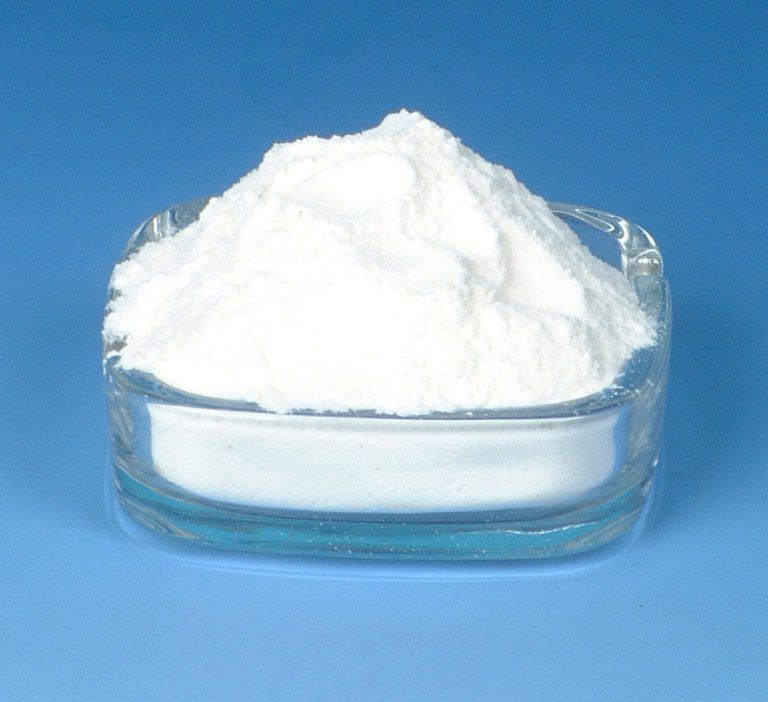
Slack wax is a mixture of paraffin wax and oil obtained from crude oil. The range of petroleum derivatives of slack wax is from 5% to 30%. Slack wax is also used as a raw material Paraffin It is known as fully refined and semi-refined. This product is used to produce all grades of paraffin wax by degreasing and bleaching processes. Degreasing or oil reduction process Slack Wax It is done in different ways and the bleaching process is also the same as changing the color of slack wax from yellow or brown to white. With this type of refining, we can get paraffin wax from Slack Wax Let's produce.
This type of slack wax is the best option for producing all types of paraffin wax. Slack wax production is very low cost and due to its oil content, it can be the best option for producing all types of paraffin. However, the price of this type of paraffin is higher than other paraffins. This product has light and heavy grades. The difference between light and heavy grades is their melting point.
How to produce waste paraffin
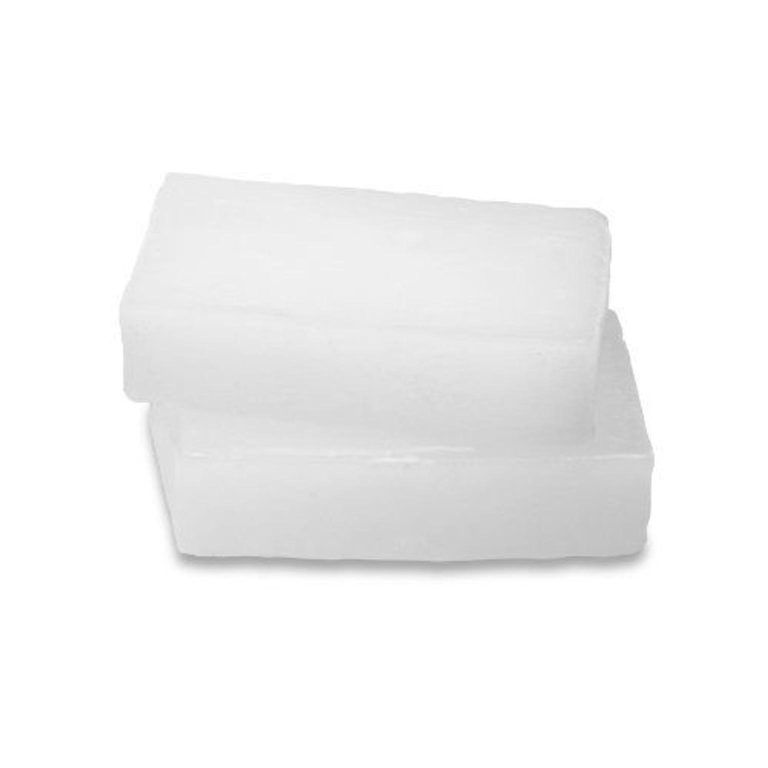
After the paraffin wax production process is completed from slack wax, waste paraffin is obtained. The main application of this type of paraffin is in the matchmaking industry because its oil content is about 50% and it has a strong odor and a completely brown color. Waste wax is a completely by-product that is obtained from the degreasing or sweating of paraffin in the paraffin wax production process. Paraffin The residue is actually a mixture of oil and slack wax. This paraffin, officially known as Foots Oil, is a byproduct of the production of semi-refined paraffin wax. 60 percent of this type of paraffin is derived from almost 100 percent slack wax produced by oil refineries.
Waste paraffin is brown in color. This paraffin is used to make matches, lubricants, explosives, fireworks, etc. Waste paraffin can be used as a hydrophobic impregnation material, fuel brick, raw material for the production of grease lubricants, insulating oils, lubricants, tire, rubber and shoe polish industries, textiles, as well as the production of petroleum jelly and white oil. It is also widely used in the plastic manufacturing industries.
How to produce liquid paraffin
Liquid paraffin is a clear substance made up of saturated hydrocarbons with a regular structure. This type of paraffin is either extracted from kerosene or is extracted into liquid form through the “Fischer-Tropsch process” at gas production sites. Paraffin (obtained from kerosene) is a mixture of hydrocarbons. It is usually made up of about 10 different hydrocarbons, each molecule containing 10 to 16 carbon atoms. Its compounds include dodecane, alkylbenzene, and naphthalene and its derivatives. Kerosene is obtained by distillation of crude oil and is used as a heating and aircraft fuel. Paraffin C10-C13 is a colorless liquid with a mild odor. It is insoluble in water. Due to the refining processes, this material evaporates slowly, is environmentally friendly (fully biodegradable) and has negligible soot (like lamp oil).
Liquid paraffin is the main raw material for the manufacture of laboratory materials. Liquid paraffin is extracted from kerosene, which contains an average of 20-25% paraffin and is therefore generally produced near refineries. The kerosene from which the paraffin is extracted must be returned to the refinery. More than 80% of liquid paraffin is used for laboratory products. The remaining liquid paraffin may be used for certain solvents. This type of paraffin has various industrial applications, including the production of synthetic resins, paints and varnishes, degreasers and printing inks. Ordinary paraffin is used as a solvent in industry for the production of polymers and resins, paints and polishing greases.
How to produce and use isoparaffin
Paraffins can be classified as straight-chain (regular paraffins) or branched-chain (isoparaffins). Most paraffin compounds are found in natural crude oils and are used as liquid paraffin. Isoparaffins are often produced in refinery processes. Liquid paraffins cannot produce good propulsion power if used as motor fuel. Isoparaffins, on the other hand, have good properties for propulsion and engine combustion. Longer-chain paraffins, i.e. isoparaffins, are the main components of paraffin. Liquid paraffin is produced from kerosene or diesel fuel, as raw materials, using molecular sieve extraction.
After appropriate purification, desulfurization, aromatization, the n-paraffin stream is passed to the fractionation unit, then the desired carbon cuts are obtained. Liquid paraffins are used as solvents. Isoparaffin is a major ingredient in the manufacture of surfactants. Isoparaffin is used in the manufacture of metalworking compounds, lubricating oil components, plasticizers and chloroparaffins, as well as in the production of oils for cold rolling of aluminum. Isoparaffin is a catalyst carrier for olefin polymerization. Isoparaffin raw materials cover a wide range of applications.
Chemical composition of paraffin
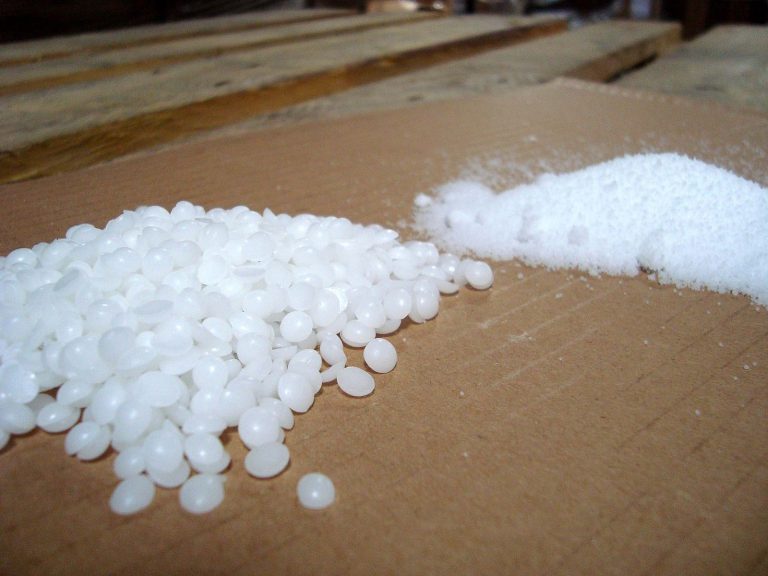
Paraffins are also called alkanes, which have the general formula CnH2n+2. n is the number of carbon atoms in a given molecule. Paraffins are divided into two groups: normal (liquid and solid) and isoparaffins. Normal paraffins or ordinary alkanes are simply written as n-paraffins or n-alkanes and are saturated hydrocarbons with open and straight chains. The second group of paraffins is called isoparaffins, which are branched hydrocarbons and belong to the isobutane family (also called methylpropane). These types of paraffins have a closed formula such as n-butane (C4H10). Compounds with different structures with the same closed formula are called isomers.
At standard temperature and pressure (STP), the first four members of the alkane series (methane, ethane, propane, and butane) are gaseous, with compounds ranging from C5H12 (pentane) to n-heptadecane (C17H36). Liquids (which make up the large fraction of hydrocarbons found in liquid fuels (such as gasoline, jet fuel, and diesel fuel)) exist as solids at STP, with heavier compounds present separately.
The heavier types are dissolved in lighter paraffins or other hydrocarbons and can be found in diesel fuel and fuel oils. Paraffins C1 to C40 usually appear in crude oil (heavier alkanes in liquid solution rather than as solid particles) and make up to 20% of the volume of crude oil.