
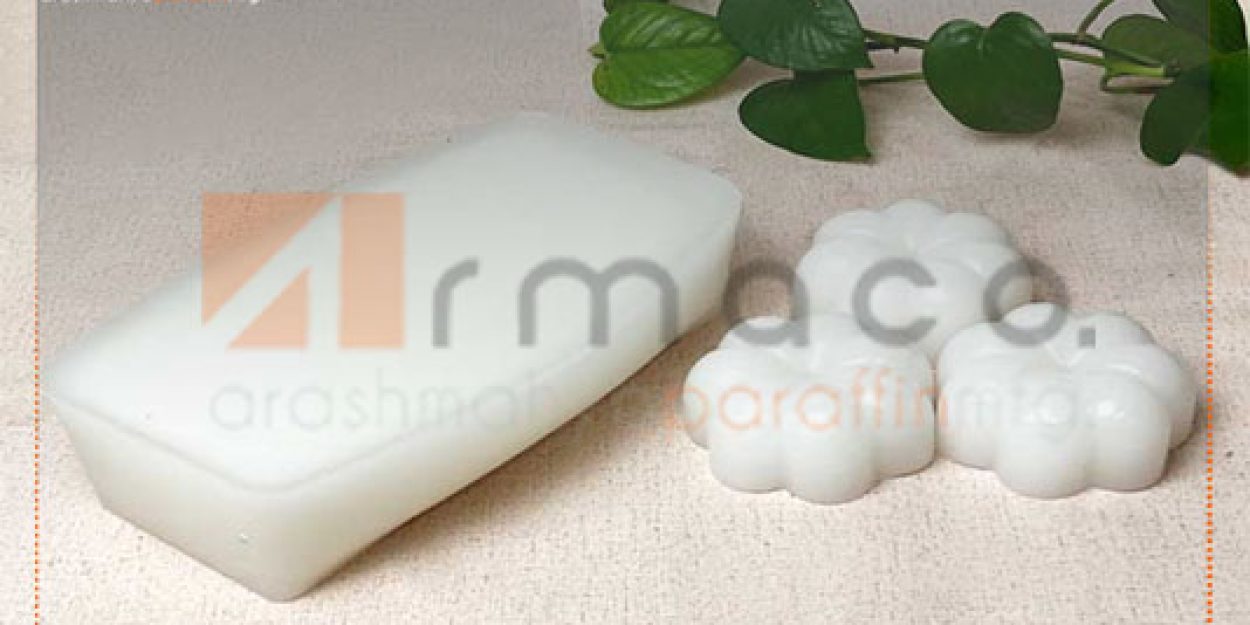
Paraffin is one of the most important materials used in various industries, which is used in many applications and uses due to its unique properties. This versatile material, with properties such as strength, thermal and electrical stability, insulation, waterproofing and corrosion resistance, is used as a packaging material, protective, cosmetics, shoemaking, electronic industries and many other industries.
In this article, we will examine the raw materials used in the production of paraffin. The main raw materials include crude oil and wax materials, which are converted into paraffin through refining and purification processes. We will also examine the importance of selecting and using the right raw materials and their impact on the quality and final performance of paraffin. We will then examine these raw materials and the paraffin production processes in detail.
Text Click on the Edit button. Lorem Ipsum is a fictitious text produced by the printing industry with the simplicity of incomprehensible text used by graphic designers.
Definition of paraffin
Paraffin is a hydrocarbon substance, also known in some sources as "kerosene". It is a member of the alkane family and has compounds with the formula CnH2n+2. The physical state of paraffin depends on the number of carbon atoms in its chain.
If the number of carbon atoms is less than 5, paraffin will be in gaseous form. If the number of carbon atoms is between 5 and 15, paraffin will be observed in liquid form and if there are more than 15 carbon atoms, it will be observed in solid form. Due to the unique properties of paraffin, this substance is used in many industries such as fuel, health and hygiene products.
Raw material for paraffin production
Paraffin is a raw material obtained from crude oil. It contains a mixture of oil and wax. To separate the two elements, the mixture is heated and separated using solvents such as ketones. The mixture is then cooled, at which point the wax crystallizes out, leaving the oil. For medical and health uses, the wax requires further refining.
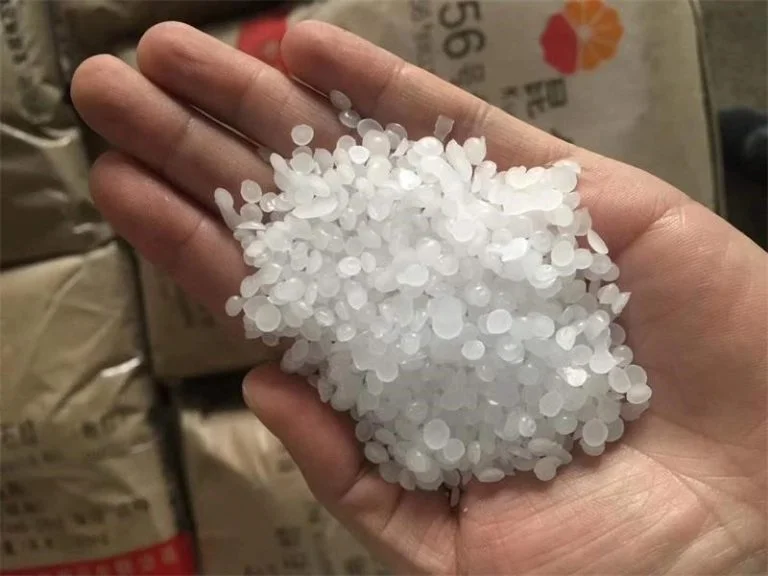
Paraffin production
Paraffin is a by-product of oil refining called Slack Wax. Initially, Slack Wax is a mixture of oil and wax. To produce paraffin, we need to refine Slack Wax. First, the oil is separated from Slack Wax using a crystallization method. In this process, Slack Wax is mixed with certain solvents such as ketones, and the impurities in the oil crystallize and separate.
The next step is to purify the wax separated from the oil using distillation. The better the oil purification is done and the lower the amount of oil in the wax, the higher the quality of the product.
Paraffins that contain large amounts of oil are usually yellow in color and will smoke heavily and have an unpleasant odor when burned. After the oil is refined, the refining process can be improved to remove the color and odor of the final product.
Refined paraffins are available in various types such as candle-making paraffin, sanitary paraffin, edible paraffin, and solid and liquid paraffin.
Types of paraffin
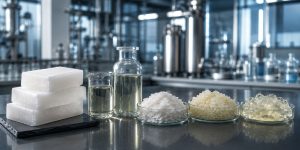
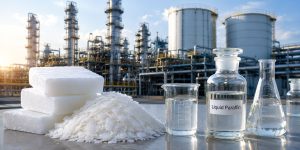
Paraffin exists in solid, liquid, and gaseous forms. Gaseous paraffin includes alkanes such as methane, ethane, propane, and butane. Liquid paraffin, also known as paraffin oil, is widely used in the pharmaceutical and cosmetic industries. It is produced in different purity grades according to specific industrial standards.
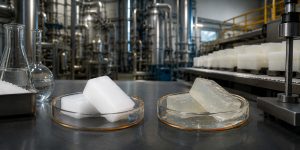
Solid paraffin, commonly referred to as paraffin wax, is a soft, colorless substance that melts at temperatures above 37°C. Common applications of solid paraffin include candle manufacturing, electrical insulation, and lubrication.
Paraffin Classification Based on Application
Medical-grade paraffin is a refined, solid, odorless, and tasteless material produced using specialized equipment. It has numerous therapeutic applications. This type of paraffin is used in the treatment of conditions such as:
Paraffin exists in solid, liquid, and gaseous forms. Gaseous paraffin includes alkanes such as methane, ethane, propane, and butane. Liquid paraffin, also known as paraffin oil, is widely used in the pharmaceutical and cosmetic industries. It is produced in different purity grades according to specific industrial standards.
Food-grade paraffin is fully refined and transparent. It is used to preserve moisture and prevent mold growth and food spoilage. This type of paraffin is applied to fruits and vegetables, such as apples and oranges, to extend their shelf life and maintain freshness for a longer period. Food-grade paraffin is not absorbed by the human body and passes through the digestive system without being metabolized.
Application of paraffin
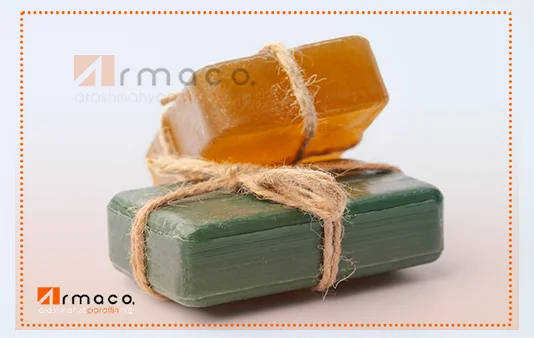
Paraffin has a wide range of applications across various industries. In summary, its uses include:
- Textile Industry: Applied to fabric fibers and yarns to protect against water, dust, and atmospheric penetration.
- Paper Industry: Used in paper product packaging as a waterproof and moisture-resistant material.
- Canning Industry: Protects food products against air, water, and humidity.
- Plastic Industry: Used in the production of plastic components as a stabilizing agent resistant to light, heat, and moisture.
- Oil & Gas Industry: Utilized in oil and gas drilling and production operations as a heat- and pressure-resistant material.
- Cosmetics & Personal Care Industry: Used in cosmetic and hygiene products as an emollient and moisturizing agent.
- Food Industry: Helps preserve food by preventing moisture loss and biological changes.
- Lubrication Industry: Used in detergents, hygiene products, and cleaning agents as a lubricating component.
- Medical Industry: Applied in medical environments for moisture retention and in pharmaceutical tablet production as a lubricant and moisture barrier.
- Lighting Industry: Used in candle manufacturing and lighting products as a heat- and UV-resistant material.
- Automotive Industry: Protects internal vehicle components against water and moisture.
- Construction Industry: Used for insulation, surface coating, and waterproofing applications.
Final words

Based on the review of the raw materials used in paraffin production, it is clear that crude oil and wax feedstocks are of critical importance. These essential raw materials, through proper refining and purification processes, are transformed into high-quality and commercially acceptable paraffin products.
For this reason, the correct selection and use of raw materials can have a significant impact on the quality and final performance of paraffin. Therefore, further research and studies on improving the extraction and purification methods of raw materials can greatly help improve the performance of the paraffin production industry and meet market needs.
Frequently Asked Questions
Yes, petroleum byproducts such as waxes and resins may also be used in the production of paraffin.
Freezing and refining processes are among the methods of paraffin extraction.
Yes, the correct selection and use of raw materials can have a significant impact on the quality and performance of paraffin.
Yes, paraffin is a material that can be recycled and reused.
In some cases, other ingredients such as catalysts, preservatives, and coloring agents may also be used in the paraffin production process. However, crude oil and waxes are the main and basic ingredients used in the production of paraffin.