

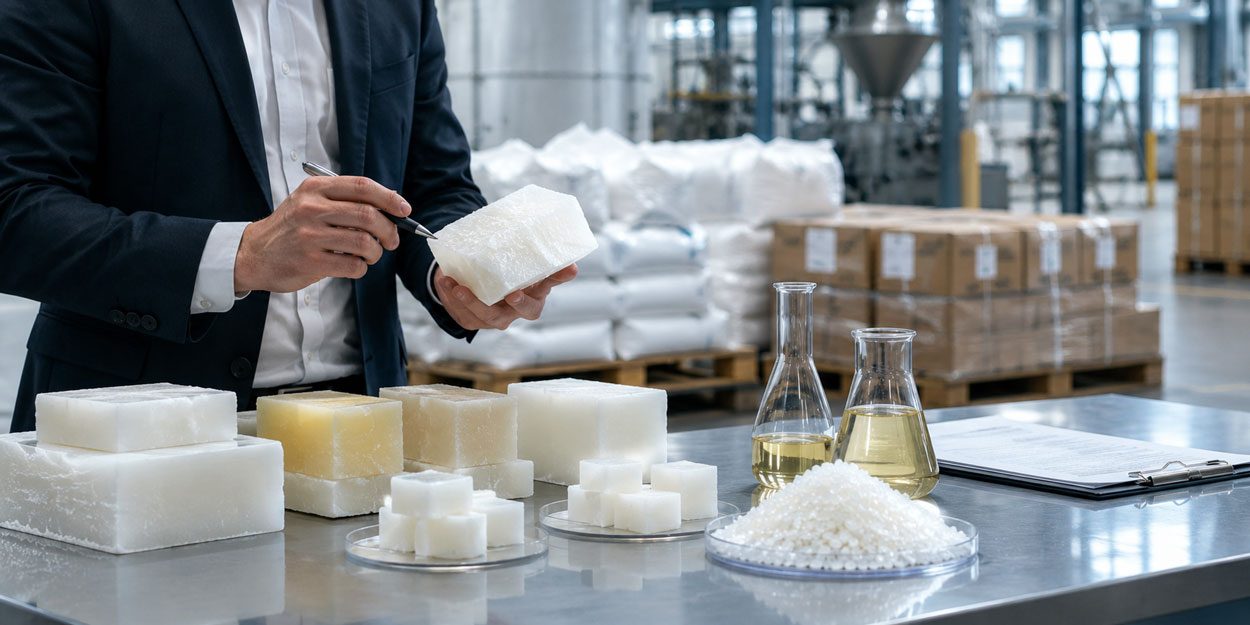
Before we delve into technical specifications and product selection, one important question usually arises for buyers and consumers: What percentage of paraffin is good? Many people assume that the higher the percentage of paraffin, the higher the quality; however, in practice, choosing the best percentage of paraffin depends on factors such as the type of application, the production process, the product formulation, and even the conditions of use. For this reason, a paraffin with a higher percentage will not necessarily be the best choice for all industries or all projects.
In the market, paraffins are available in different percentages and specifications, each designed for a specific application. For example, the needs of an MDF or chipboard manufacturer are completely different from those of a candle manufacturing unit or a general consumer. If the choice is made without sufficient knowledge, in addition to increasing costs, the expected performance may not be achieved.
In this article, we examine that What is meant by paraffin percentage, does a higher percentage always indicate better quality, and what type of paraffin is a better choice for each application?. You will also learn the most important points to consider when purchasing so that you can choose the product you need with a more specialized and informed perspective.
What is meant by paraffin percentage?
When the market talks about 1%, 1.5%, or 3% paraffin, many buyers think that this number indicates the overall quality of the product; but in fact, The percentage of paraffin or the percentage of oil contained in it is one of the technical specifications of the product that must be selected according to the type of application.. For this reason, a specific number cannot be considered the best option for all industries.
In paraffinic products, the percentage of oil or its associated technical specifications affect properties such as clarity, hardness, melting point, flexibility and the final performance of the product. For example, in some industrial applications, paraffin with a lower percentage may perform better, while for some other uses, it makes more sense to use paraffin with a higher percentage.
The important point is that The percentage of paraffin is not the same as its purity or manufacturing quality.. Two products may have the same percentage, but offer completely different performance due to differences in raw materials, manufacturing process, or product uniformity. For this reason, manufacturers and professional buyers usually look at indicators such as raw material quality, product stability, and compatibility with the manufacturing process in addition to percentage.
If you are choosing between different types of paraffin, it is best to first determine your application. For example, in some industrial processes, the use of Paraffin wax It is a more suitable option due to its physical properties and specific formulation, while in some applications Liquid paraffin It could be a more optimal choice. Later in the article, we will examine whether a higher percentage is always an advantage and which choice makes more sense for each application.
Is higher percentage paraffin always better?
One of the most common perceptions in the market is that the higher the percentage of paraffin, the higher the quality of the product; but this view is not always true. In fact, The best paraffin percentage is the number that is most compatible with your type of consumption and production process.. Selecting paraffin based solely on a number, without considering the end use, can increase costs or even reduce production efficiency.
Paraffins with different percentages are designed for different needs. In some industries, using paraffin with a higher percentage can help improve some technical properties, but in some applications, this may cause problems in the production process or unnecessarily increase the cost of raw materials. For this reason, professional manufacturing units usually adapt the technical specifications of the product to the needs of their production line before purchasing and are not satisfied with just the number printed on the product.
Another important point is that the final quality of paraffin wax does not depend only on its percentage. Factors such as the quality of the raw materials, the production method, the stability of the product, the uniformity of the technical specifications and the reliability of the supplier also play an important role in its performance. Two products with the same percentage may produce different results in practice, because their production process and quality control were not the same.
From the experience of various industry players, it can also be concluded that the choice of paraffin should be based on the actual conditions of use. For example, in the wood, MDF and chipboard industries, in addition to the percentage of paraffin, characteristics such as emulsion stability and compatibility with the production formulation are of great importance. For this reason, experts in this field usually check the technical specifications of the product before purchasing and choose the appropriate type of application. Paraffin wax Or Liquid paraffin They use it appropriately.
So if you're wondering, "What percentage of paraffin is good?", the short answer is: A higher percentage doesn't necessarily mean a better choice.. The best option is the paraffin that best matches your needs in terms of technical specifications, manufacturing quality, and type of application. In the next section, we will examine in more detail what type and percentage of paraffin would be the most appropriate choice for each application and industry.
What percentage of paraffin is suitable for each application?
Choosing the right percentage of paraffin depends on the type of consumption and conditions of use. For this reason, a specific percentage cannot be considered the best option for all industries. Professional manufacturers usually match the technical requirements of the production line, the characteristics of the final product, and the specifications of the paraffin before purchasing, in order to achieve the desired performance and avoid unnecessary cost increases.
For example, in wood industries such as MDF, chipboard and fiberboard production, paraffin is used as a hydrophobic agent and product quality improver. In these applications, not only the percentage of paraffin is important; but factors such as product stability, quality uniformity and its compatibility with the production formulation also play a decisive role. For this reason, many industrial units compare the technical specifications of the product with the needs of their production line before purchasing.
The candle industry is also different. Depending on the type of candle, its clarity, strength, and final appearance, paraffin may be used with different properties and percentages. For this reason, choosing a product based solely on percentage numbers, regardless of the type of application, cannot yield the desired result.
Overall comparison of paraffin selection based on application
Application type | The most important selection criterion | Key point |
MDF and chipboard industries | Formulation compatibility and product stability | The percentage of paraffin should be selected according to the production process. |
Candle making | Transparency, hardness and appearance quality | In addition to the percentage, the quality of the raw materials is of great importance. |
General and industrial uses | Type of application and conditions of use | Choosing based on technical specifications will yield better results than simply looking at percentages. |
One thing that many buyers don't pay attention to is that A higher percentage is valuable when it aligns with the consumer's real needs.. Otherwise, you may end up paying more for a product that doesn't provide any specific practical benefit for that application.
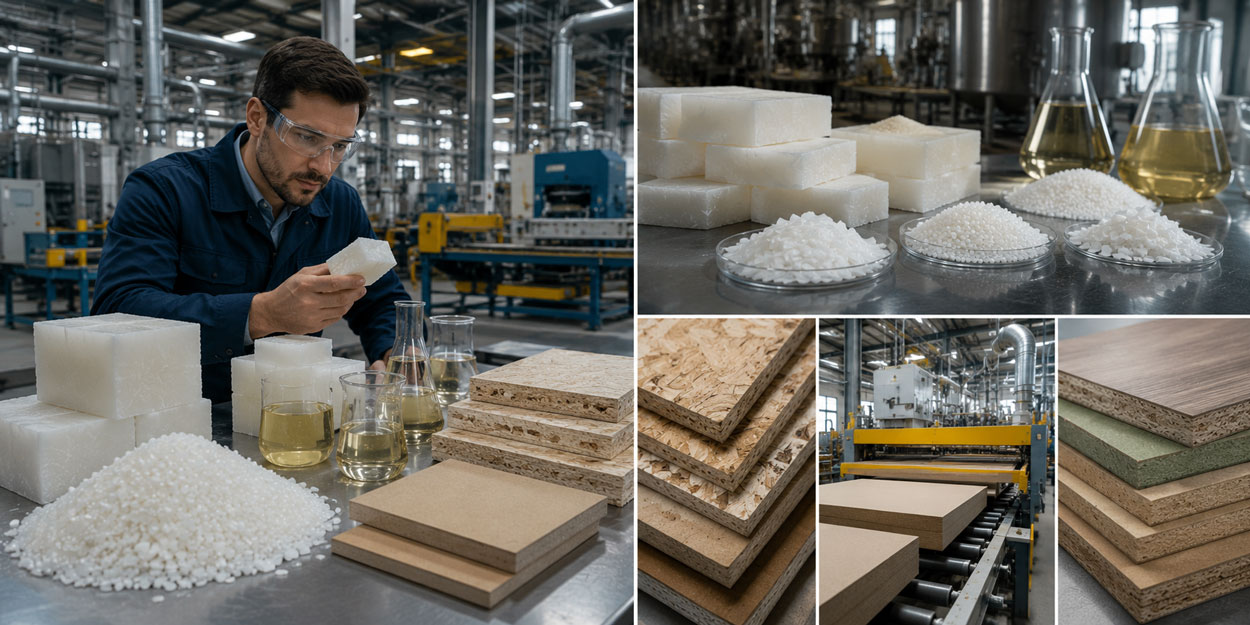
Also, when choosing a product, it is better to be familiar with the different types of paraffin. In some processes, the use of Paraffin wax It is a more suitable choice due to its physical properties and storage conditions, while in some industrial applications and special formulations, Liquid paraffin It offers better performance. Understanding the differences between these products will help you not only choose the right percentage, but also the right type of paraffin to suit your needs.
Finally, if we want to give a practical answer to the question, "What percentage of paraffin is good?", we must say: The best paraffin percentage is the percentage that best matches your application, production conditions, and technical specifications; not simply the highest number available on the market..
When buying paraffin, don't just pay attention to the percentage.
Although paraffin percentage is an important criterion in choosing this product, making a decision based solely on this number can lead to a purchase that is not in line with your actual needs. Professional buyers and manufacturing units usually review a set of technical specifications along with paraffin percentage to select a product that is appropriate for their production process and expected quality.
Quality of raw materials and production process
The quality of paraffin wax is highly dependent on the type of raw material and the method of production. Two products may be marketed with the same percentage, but have completely different performance due to differences in the quality of refining, the amount of impurities or the uniformity of production. For this reason, choosing a product from a reputable supplier can significantly reduce the risk of problems occurring in the production process.
Choose the type of paraffin according to the application.
In addition to the percentage, you need to specify that for your intended application Paraffin wax Is it more appropriate or Liquid paraffinEach of these products has different characteristics and areas of use, and choosing the right one can directly affect the quality of the final product and the efficiency of the production process. If you want to learn more about the characteristics and applications of these products, you can read the complete guide. Paraffin wax and Liquid paraffin Study.
Compatibility with the production process
Manufacturing conditions and formulations vary across industries, including MDF, particleboard, candles and other industrial products. As a result, a product that works best for one factory may not be the ideal choice for another. Reviewing specifications, consulting with the supplier and, if possible, conducting small-scale testing can help avoid costly mistakes.
Don't just base it on price.
A common mistake in the market is to choose paraffin based solely on the price or percentage stated. While factors such as consistent quality, product uniformity, technical services and continuous supply capability will have a greater impact on the actual production costs in the long run. Sometimes using a product that is more technically suited to your needs will reduce consumption, improve the quality of the final product and increase productivity.
Ultimately, if you're looking for a safe choice, it's better to ask yourself, instead of focusing on the question, "What has the highest percentage of paraffin?" Which type and specification of paraffin is best suited for my application? The answer to this question will usually lead you to a more accurate and economical choice.
Common mistakes in choosing paraffin percentage
A significant part of buyers' dissatisfaction with paraffin performance is not due to the low quality of the product, but to Wrong choice. It comes back. In many cases, a paraffin that performs very well for one application may not produce the desired result in another process. Being aware of common mistakes when purchasing can prevent additional costs and reduced quality of the final product.
1. The idea that a higher percentage is always better
The most common mistake is to assume that a higher percentage of paraffin automatically means higher quality. As we have seen, the percentage is only one of the technical characteristics of the product and the appropriate choice must be made based on the type of use and production conditions. In many applications, using a paraffin with a higher percentage does not provide any practical advantage and may even increase production costs.
2. Paying attention only to the price of the product
Some buyers make decisions based solely on price or low initial costs. While the quality of raw materials, stability of technical specifications, uniformity of production and continuous supply are factors that have a greater impact on the cost and quality of the final product in the long run. A cheap but inappropriate choice can lead to increased waste or a decrease in production quality.
3. Ignoring the type of application
Paraffin wax used in woodworking, candle making, or other industrial applications does not necessarily have the same characteristics. Choosing a product without considering the type of use is one of the main reasons for not achieving the desired result. For this reason, before purchasing, it should be determined in what process and for what purpose the product is going to be used.
4. Ignoring technical specifications and expert advice
In addition to the paraffin percentage, professional buyers usually also check information such as product type, physical properties, compatibility with the production line, and the supplier's technical recommendations. Using the experience of experts and studying the product's technical specifications can greatly reduce the likelihood of making the wrong choice.

Conclusion
If we want to answer the question «What percentage of paraffin is good?» To give a short and practical answer, we must say that The best percentage of paraffin is the percentage that is chosen according to your type of application and technical needs.. Contrary to popular belief, a higher percentage does not always mean better quality, and in many cases, making the right choice based on the conditions of use is more important than the number printed on the product.
When purchasing, in addition to the percentage of paraffin, it is better to pay attention to factors such as the quality of raw materials, product stability, type of paraffin, technical specifications, and supplier reputation. This comprehensive view will help you choose a product that, in addition to proper performance, will also have the best return on your investment.
If you are still hesitant about choosing between types of paraffin, it is recommended to first consider the characteristics and uses. Paraffin wax and Liquid paraffin Review and then choose the most appropriate option according to the needs of your production line or consumption. Ultimately, an informed choice based on technical specifications will both improve the quality of the final product and prevent costs resulting from incorrect selection.