
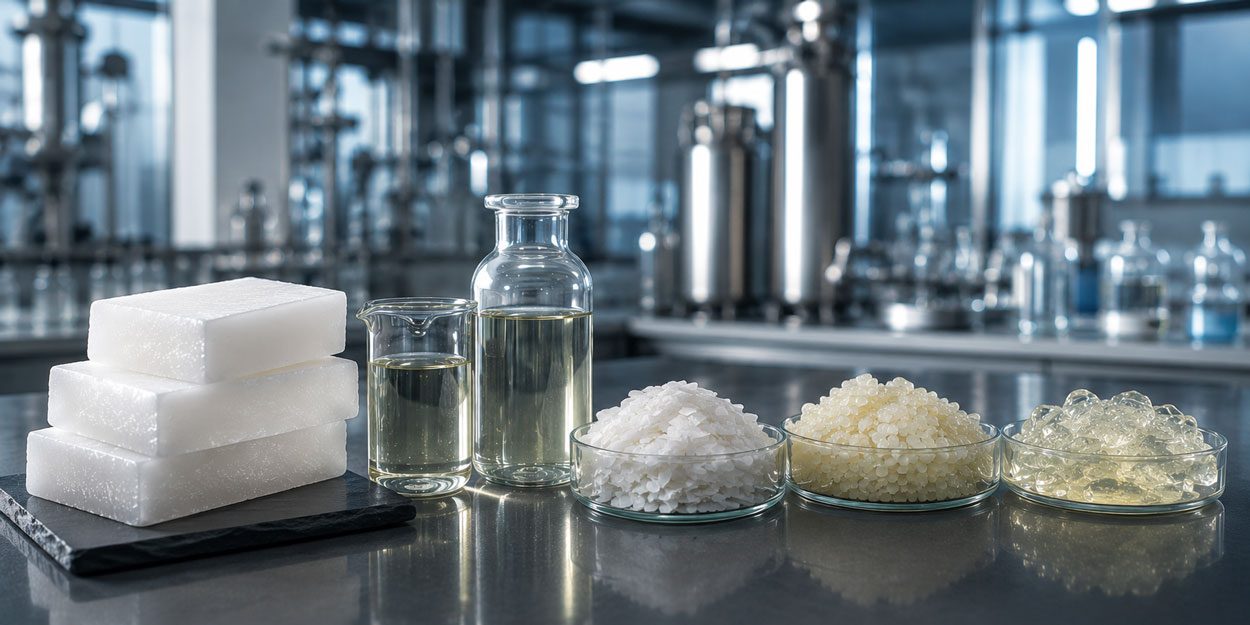
Paraffin is one of the most widely used petroleum derivatives, which is used in a wide range of industries due to its characteristics such as chemical stability, hydrophobicity, suitable melting point and malleability. From the production of candles and cosmetics to the packaging, pharmaceutical, rubber, polymer and even food industries, each application requires a specific type of paraffin. For this reason, familiarity with the types of paraffin and their differences plays an important role in choosing the right raw material and achieving better quality of the final product.
In this article, we will first introduce you to the concept and characteristics of paraffin, then we will examine its different types, including solid, liquid, microcrystalline, macrocrystalline, jelly, and chlorinated paraffin, and explain the use of each. We will also help you choose the best type of paraffin according to your industrial or manufacturing needs by comparing its characteristics and providing a selection guide.
What is paraffin and why is it important in various industries?
Paraffin A group of saturated hydrocarbons (alkanes) that are mainly produced from the refining process of crude oil and the separation of petroleum fractions. This material has become one of the most widely used raw materials in various industries due to its stable structure, odorless and colorless nature, resistance to moisture, and insulating properties.
The physical and chemical properties of paraffin vary depending on the type of processing and the amount of oil present in it. For this reason, paraffin is not just a single product, but a collection of products with different grades and properties, each designed for a specific application. For example, liquid paraffin is widely used in the production of cosmetic, pharmaceutical and health products, while solid and crystalline paraffin are used more in the candlemaking, coating and packaging industries.
One of the most important reasons for the widespread use of paraffin is its adaptability to the needs of various industries. This material can act as a protective coating, a raw material for production, a moisture insulator, a lubricant, or an additive in industrial formulations. Also, the possibility of producing paraffin with different percentages of oil and different degrees of purity has allowed manufacturers to choose the right option according to their needs.
In practice, choosing the right type of paraffin has a direct impact on the quality of the final product, production cost, and performance of industrial processes. For this reason, understanding the types of paraffin and their differences is the first step to making an informed choice and optimally using this valuable material in various industries.
Paraffin type | Main feature | The most important application |
Paraffin wax | Variable oil percentage, suitable melting point | Candle making, packaging, rubber industries |
Liquid paraffin | Transparent, colorless and odorless | Cosmetics, pharmaceuticals, textiles |
Microcrystalline paraffin | High flexibility and adhesion | Adhesives, rubber, industrial coatings |
Macrocrystalline paraffin | Coarse crystal structure | Candle making and general industrial applications |
Paraffin jelly | High transparency | Decorative candles |
Chlorinated paraffin | Heat and flame resistant | PVC, cable and polymer industries |
What are the types of paraffin?
Paraffin is divided into different types based on its structure, oil content, production method and end use. Each of these types has different physical and chemical properties and is therefore used in specific industries. Familiarity with this classification helps manufacturers and buyers to choose the right option according to their needs.
Solid Paraffin
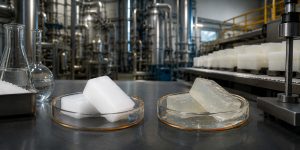
Paraffin wax It is one of the most common and widely used types of paraffin, obtained from the processing of slack wax and produced in different grades based on the percentage of oil in it. The lower the percentage of oil, the higher the purity, transparency, and quality of the paraffin.
The most important applications of solid paraffin are:
- Production of various candles and decorative products
- Packaging and coating industries
- Rubber and plastic production
- Cosmetics and health industries
- Some medicinal and protective uses
Liquid Paraffin
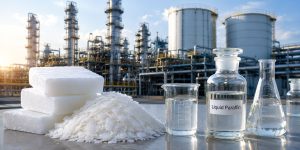
Liquid paraffin is a clear, colorless, and almost odorless product that is usually produced according to pharmaceutical and health standards. This type of paraffin is available in various industrial, health, and pharmaceutical grades and, due to its high purity, is used in the formulation of many consumer products.
One of the most important applications Liquid paraffin Examples include the production of cosmetic creams and lotions, industrial oils, textile industries, pharmaceuticals, and protective coatings for some food products.
Microcrystalline paraffin
Microcrystalline paraffin has a very fine crystal structure and is more flexible than regular paraffin. This feature increases its adhesion and strength, making it suitable for use in specialized industries.
This type of paraffin is commonly used in the production of adhesives, rubber industries, protective coatings, cosmetic products, and some industrial processes.
Macrocrystalline paraffin
Macrocrystalline paraffin, sometimes known as light paraffin, has a coarser crystal structure than microcrystalline paraffin and is used in various industrial applications, depending on the percentage of oil and the type of processing. This product is particularly useful in candle making and some manufacturing processes that require paraffin with a stable structure.
Paraffin jelly
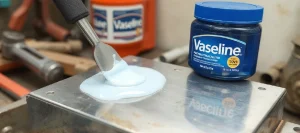
Paraffin jelly is mostly used in the production of decorative candles due to its high transparency and beautiful appearance. This type of paraffin can be combined with colors and decorative elements and creates a more attractive visual effect than solid paraffin. Of course, to maintain its quality, exposure to direct and excessive heat should be avoided.
Chlorinated paraffin
Chlorinated paraffin is one of the important derivatives of paraffin, which is produced by chlorination process. This product is widely used as a plasticizer and additive in PVC, cable, artificial leather, flooring and some polymer products industries. Good resistance to heat and improvement of mechanical properties of polymer materials are the most important reasons for using this type of paraffin.
Other types of paraffin
In addition to the above, normal, cyclic (petroleum) paraffins and some other specialty grades are also used in various industries. However, these categories are more specialized and refinery-specific, and industrial users typically deal with solid, liquid, microcrystalline, jelly and chlorinated paraffins.
Paraffin type | Appearance | Indicator feature | The most important application |
solid | White or translucent | Affordable and widely used | Candle making, packaging |
Liquid | Clear and fluent | High purity and chemical stability | Cosmetics, pharmaceuticals, textiles |
Microcrystalline | Solid with fine crystals | High flexibility and adhesion | Adhesives, rubber, industrial coatings |
Macrocrystalline | Solid with larger crystals | Stable structure | Candles and general industrial applications |
Jelly | Completely transparent | High visual impact | Decorative candles |
Clara | Thick liquid or soft solid | Improving the properties of PVC and polymers | Cable, flooring, artificial leather |
What are the differences between types of paraffin?
Although all types of paraffin belong to the saturated hydrocarbon family, they differ significantly in terms of structure, oil content, transparency, flexibility, and application. Understanding these differences helps in selecting the correct paraffin and increasing the quality of the final product.
Differences in structure and physical properties
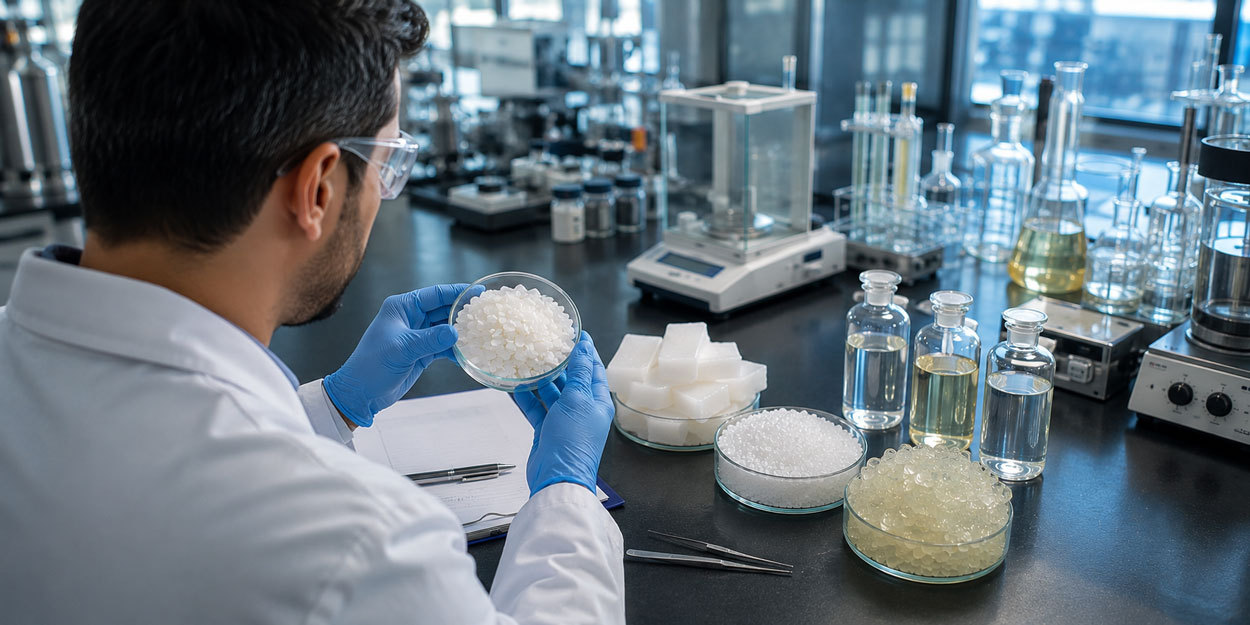
Solid paraffin and liquid paraffin are the most common types of paraffin. Solid paraffin is available in blocks or bars at room temperature and is commonly used in the production of candles and protective coatings, while liquid paraffin is used in the cosmetic, pharmaceutical, and textile industries due to its fluidity and high purity.
On the other hand, microcrystalline paraffin has much greater flexibility and adhesion than regular paraffin due to its very fine crystals. In contrast, macrocrystalline paraffin has a coarser crystal structure and is more commonly used for general applications and candle making.
Difference in oil percentage and purity
One of the most important criteria for classifying paraffin is the amount of oil it contains. In general, the lower the percentage of oil, the purer, clearer, and higher quality the paraffin. For this reason, paraffins with a low oil percentage are usually preferred for the production of high-quality candles, cosmetic products, and sensitive applications.
In contrast, paraffins with a higher oil percentage are more widely used in some industrial uses and the production of general products due to their more economical price.
Difference in terms of application
Each type of paraffin is designed for a specific purpose, and choosing the wrong one can reduce product quality or increase production costs. For example, using jelly paraffin in the production of decorative candles is a good choice, but for mass production of regular candles, solid or crystalline paraffin will be a more economical and practical option.
Also, in the polymer and PVC production industries, chlorinated paraffin is usually used as a softener and additive, while the cosmetic and pharmaceutical industries, due to the need for high purity, mostly use liquid paraffin with health and pharmaceutical grades.
The most important differences between paraffin types at a glance
- Paraffin wax: Suitable for candle making, packaging and general applications.
- Liquid paraffin: Suitable for cosmetic, health, pharmaceutical and textile industries.
- Microcrystalline paraffin: Suitable for the production of adhesives, rubber and industrial coatings.
- Macrocrystalline paraffin: Suitable for candle making and some industrial applications.
- Paraffin jelly: Suitable for decorative candles.
- Chlorinated paraffin: Suitable for PVC, cable and polymer products industries.
Ultimately, the best type of paraffin is the product whose characteristics best match your technical needs and production conditions; for this reason, in addition to the type of paraffin, factors such as oil percentage, melting point, purity, and production standard should also be considered when selecting.
Application of various types of paraffin in various industries
Paraffin is one of the most widely used raw materials in various industries due to its properties such as moisture resistance, chemical stability, insulating properties, flexibility, and ability to be combined with various materials. However, each industry requires a specific grade or type of paraffin, and the correct choice can have a direct impact on the quality of the final product and production costs.
Candle making industry
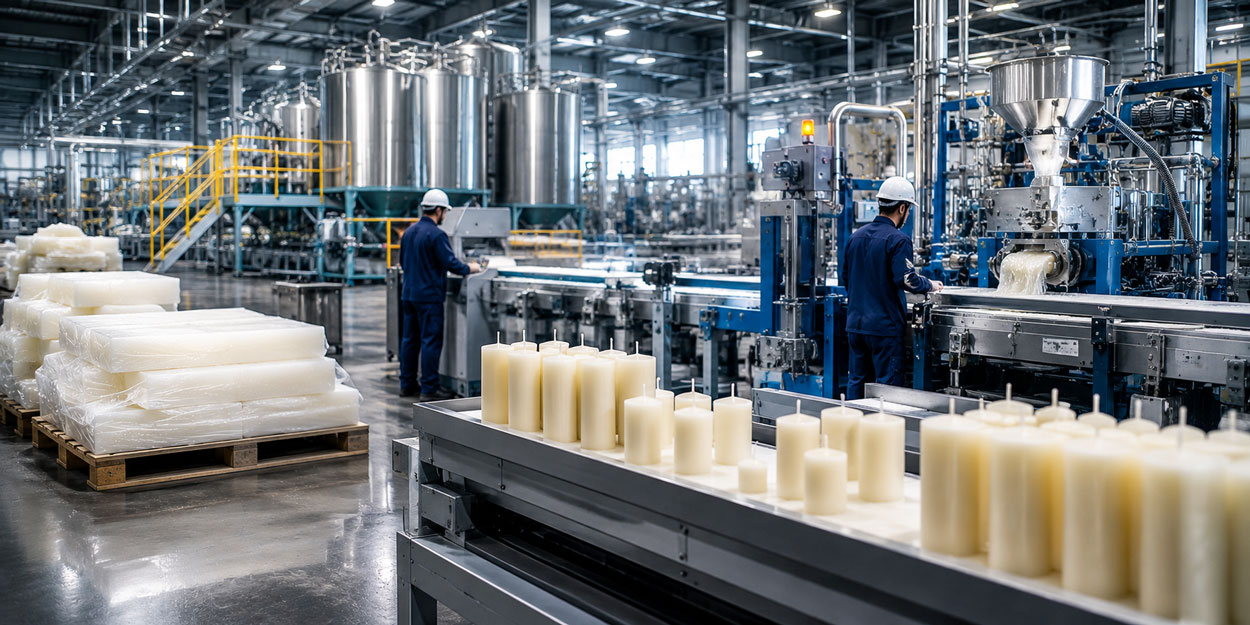
One of the most well-known uses of paraffin is in the production of all kinds of regular, decorative, and scented candles. Solid paraffin and crystalline paraffin are the most widely used in this industry due to their favorable melting point, uniform burning, and high colorability. In contrast, jelly paraffin is an ideal option for the production of decorative and glass candles due to its high transparency.
Cosmetics and health industries
Medical or pharmaceutical grade liquid paraffin is a widely used raw material in the production of creams, lotions, skin care oils and some hygiene products. It helps maintain skin moisture and is used in many cosmetic formulations due to its high purity.
Pharmaceutical and medical industries
In the pharmaceutical industry, liquid paraffin with pharmaceutical standards is used as a base material in the production of some ointments, lubricants and therapeutic products. The purity, stability and chemical compatibility of this product have led to its widespread use in this field.
Packaging and food industries
In some industrial applications, paraffin is used as a protective coating to increase the shelf life of products. Creating a layer resistant to moisture and contamination is one of the most important reasons for using paraffin in the packaging and coating industries. Also, in some specialized processes, authorized grades of paraffin are used to coat fruits and food products.
PVC, polymer and rubber industries
Chlorinated paraffin is one of the most important additives used in the PVC and polymer industries. This substance is used as a secondary plasticizer and improver of mechanical properties in the production of cables, flooring, artificial leather, hoses and some polymer parts. In addition, paraffin and its derivatives are also used in the rubber industry and the production of some industrial coatings.
Textile industries and other industrial applications
In the textile industry, paraffin is used to lubricate fibers, reduce friction, and improve equipment performance. It also plays an important role in the production of adhesives, protective coatings, moisture insulators, anti-corrosion products, and some other manufacturing processes.
Choosing the right paraffin based on the type of application
The choice of paraffin type should be based on the final product requirements. The following table can help you make a quicker decision:
Application | Recommended paraffin type |
General candle making | Solid or crystalline paraffin |
Decorative candles | Paraffin jelly |
Cosmetics and health products | Sanitary grade liquid paraffin |
Pharmacy | Pharmaceutical grade liquid paraffin |
PVC and cable industries | Chlorinated paraffin |
Adhesives, rubber and industrial coatings | Microcrystalline paraffin |
Packaging and protective covering | Solid or liquid paraffin depending on the application |
The important point is that when choosing paraffin, not only its type is important; factors such as oil percentage, purity, melting point, and production standards must also be considered in accordance with the needs of the industry.
How to choose the best type of paraffin?
Given the variety of paraffin grades and applications, it is not possible to choose the right product based on name or price alone. Factors such as type of application, oil percentage, purity, melting point, and required standards all influence the final choice. In addition to improving product quality, choosing the right paraffin can reduce production costs and prevent technical problems in the production process.
1. Determine the type of application
The first step is to determine the end use of the paraffin. Each industry requires specific properties, and for this reason, one type of paraffin cannot be the best choice for all uses.
Application | Suitable type of paraffin |
Production of regular candles | Paraffin wax |
Decorative and clear candles | Paraffin jelly |
Cosmetics and health products | Sanitary grade liquid paraffin |
Pharmaceutical products | Pharmaceutical grade liquid paraffin |
PVC and cable industries | Chlorinated paraffin |
Production of industrial adhesives and coatings | Microcrystalline paraffin |
2. Pay attention to the percentage of paraffin oil
One of the most important indicators of paraffin quality is the amount of residual oil in it. In general, the lower the percentage of oil, the higher the purity, greater the clarity, and better the performance of the paraffin.
- Paraffin with low oil content: Suitable for high-quality candles, cosmetic products and sensitive applications.
- Paraffin with medium or higher oil percentage: Suitable for general use and some industrial applications where economic price is more important.
In many industrial projects, choosing the wrong oil percentage can change the appearance of the product, reduce the quality of the spark plug fuel, or reduce performance in the production process.
For more information, you can read the article Differences Paraffin 1% and 3% Also read
3. Check the purity and standard of the product
For health, cosmetic and pharmaceutical applications, the use of paraffins that meet valid standards such as USP Or BP In industrial applications, attention should also be paid to the uniformity of quality, product stability, and technical specifications provided by the manufacturer.
4. Consider melting point and physical properties
Depending on the application, you may need a paraffin with a higher or lower melting point. For example, in candle making, choosing the right melting point directly affects the quality of the fuel, the appearance and the resistance of the candle to temperature changes. In some industrial applications, greater flexibility or adhesion also makes it more logical to choose microcrystalline paraffin.
Common mistakes in choosing paraffin
Many buyers, especially those who are purchasing paraffin for the first time, base their decision solely on price, while this approach can lead to increased waste or reduced quality of the final product. Some of the most common mistakes include:
- Choosing paraffin regardless of the type of application.
- Ignoring oil percentage and purity level.
- Use of industrial paraffin in health or pharmaceutical applications.
- Choosing between gel or crystalline paraffin regardless of temperature conditions and production process.
- Purchasing a product without checking the technical specifications and production standards.
A practical recommendation for better choices
If your goal is to produce a product with consistent quality and predictable performance, it is best to determine your technical needs before purchasing and select paraffin based on application type, oil percentage, standard, and physical properties. In specialized projects, receiving technical advice and reviewing the product datasheet can also prevent costly errors in the production process.
Conclusion
Paraffin is one of the most important petroleum derivatives that has found a special place in various industries due to its characteristics such as chemical stability, insulating properties, resistance to moisture and usability in various formulations. However, paraffin is not a single product and is produced in various grades and types such as solid, liquid, microcrystalline, macrocrystalline, jelly and chlorinated, each of which is designed for specific applications.
Choosing the best type of paraffin depends more than anything on the ultimate needs of the project or product. Factors such as oil percentage, purity, melting point, production standards, and application area all play a role in choosing the right option. For this reason, understanding the differences between paraffin types and reviewing their technical specifications can help manufacturers and buyers achieve better quality while also reducing production costs and operational risks.
If you intend to use paraffin in the candlemaking, cosmetics, pharmaceutical, packaging, PVC, or other industrial applications, it is recommended that you carefully review the technical specifications of each grade before making a final selection and choose the most appropriate type of paraffin according to your needs.