
Industrial and scientific guide to understanding Petroleum Jelly, from refinery feed to selecting the right grade
Vaseline or petrolatum is a semi-solid, hydrophobic, oily substance made from a mixture of refined heavy hydrocarbons. It is known commercially as Petroleum Jelly, Petrolatum, and sometimes petroleum jelly. Its various grades are used in cosmetic and health product formulations, as a base for medicinal ointments, as a temporary protection for metal surfaces, as a light lubricant, and in a number of industrial processes.
To accurately answer the question "What is Vaseline?", one must distinguish between the generic name of the substance, the trade name, the industrial grade, and the grade used in human products. Whiteness or odorlessness alone does not indicate that it is a medicinal or health product; the actual quality is determined by the source of the feed, the level of purification, the claimed standard, and the results of the analysis sheet of each batch.
This article is written with an industry perspective. The sections related to skin and wounds are general information and are not intended to replace the evaluation of a physician, pharmacist, or the final product instructions.
What Is Vaseline?
Vaseline is the common name for a substance that is called Petrolatum or Petroleum Jelly in technical texts. Petrolatum is not a pure chemical with a single structure; rather, it is a complex mixture of semi-solid hydrocarbons whose oil and wax parts combine to form a jelly-like texture. For this reason, it is not correct to give Vaseline a fixed molecular formula such as C25H52.
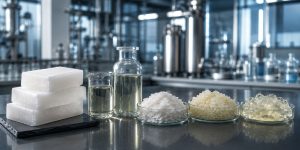
At room temperature, this mixture usually appears as a soft, oily, spreadable mass. Its color can vary from white and almost colorless to yellow, amber, or darker. This color change is not necessarily a measure of safety or quality alone, but is usually related to the type of feed, the degree of purification, and the intended application.
The word Vaseline is essentially a well-known brand name that is used in everyday use instead of the generic name of the substance. In industrial purchasing and preparing technical documents, it is better to use the name Petrolatum and the exact grade or standard of the product to avoid confusion between the brand and the raw material.
What ingredients does Vaseline consist of?
The structure of petrolatum is composed of a distribution of heavy hydrocarbons. The waxy components form the semi-solid skeleton of the product, and the oily components are held within this network. The ratio and nature of these two components affect the consistency, spreadability, permeability, appearance, dropping point, and stability of the product.
In a controlled grade, the manufacturer attempts to keep the final composition within a specified range of physical and chemical properties. Therefore, two samples that are both labeled "white Vaseline" may not be identical in consistency, viscosity, temperature behavior, color, and formulation compatibility.
How is Vaseline produced?
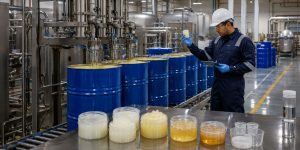
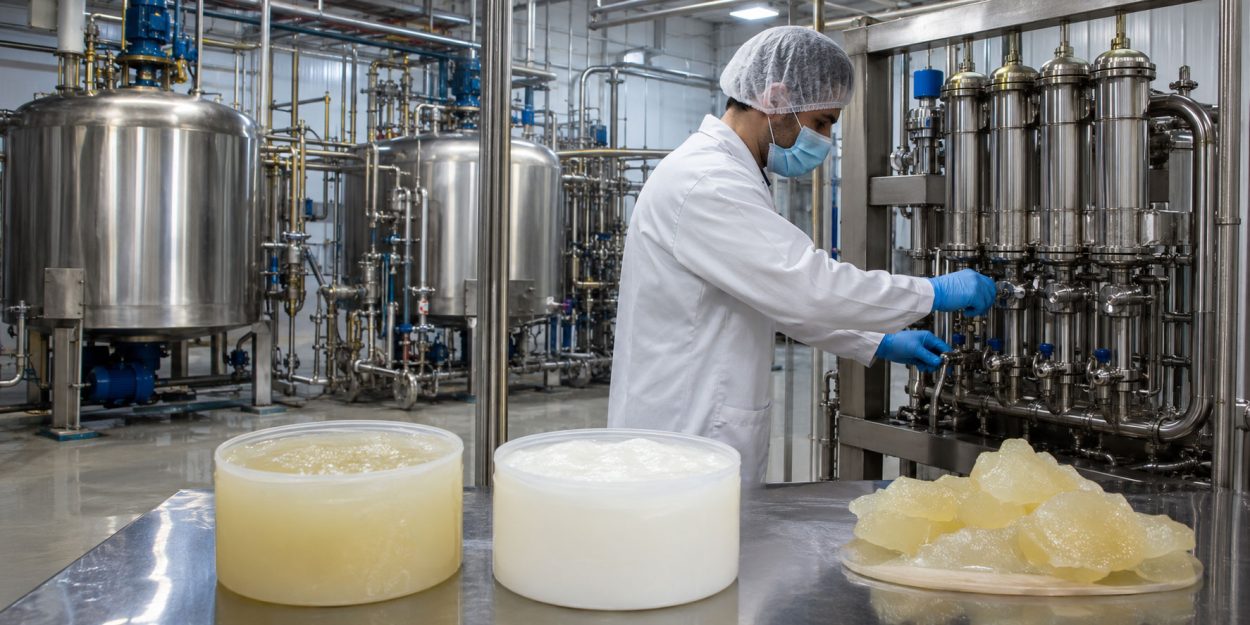
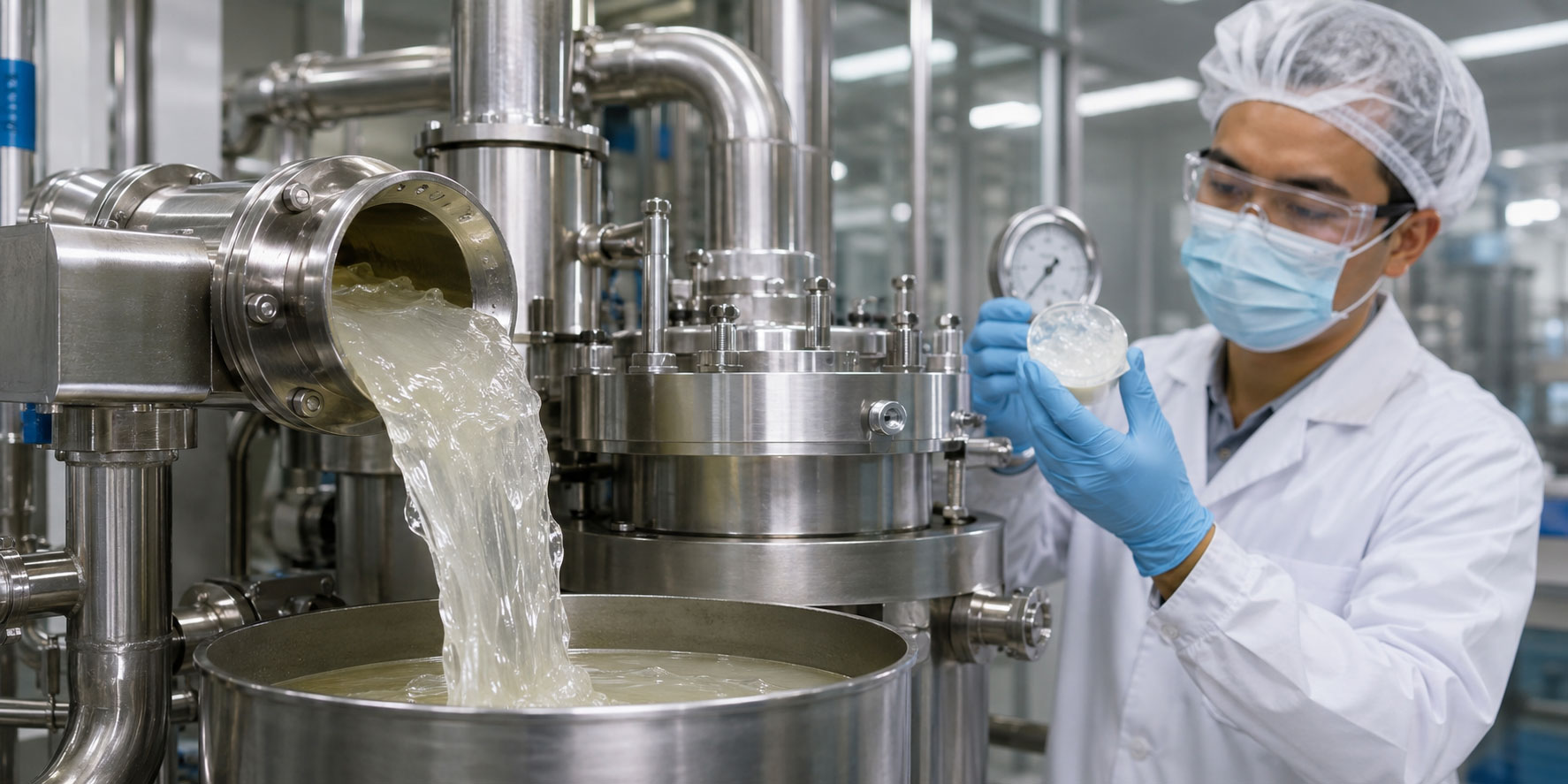
The production of Vaseline should not be limited to a simple distillation step. Petrolatum is obtained from the heavy oil and wax streams of the refinery and undergoes a series of separation, refining and specification operations to achieve the final grade. The exact arrangement and technology of the units can vary between manufacturers, but the general logic of the process is constant.
1. Feed selection and evaluation
The feedstock is usually selected from heavy paraffinic cuts and streams from the base oil process. The type of crude oil, refining history, amount of waxy and oily components, color, odor, and unwanted compounds affect the ability to produce clear, pure grades. At this stage, a feedstock that is suitable for industrial petroleum jelly is not necessarily suitable for the production of sanitary or pharmaceutical grades.
2. Separation and dewaxing
During the refining process, a semi-solid, waxy portion is separated, which can be used as the basis for the production of petrolatum. The goal is to achieve a balance between the oil and solid components; a balance that keeps the product semi-solid at room temperature. Unlike solid paraffin, in petrolatum, the goal is not to completely remove the oil, as the oily portion is needed to create a gel-like texture.
3. Purification, decolorization and deodorization
Crude petrolatum may have a dark color, an unpleasant odor, resins, and unwanted compounds. Depending on the target grade, processes such as hydrotreating, adsorption, filtration, and post-treatment are used to improve color, odor, and stability. Industrial documents and patents on petrolatum refining also describe the separation of colorants and resins with suitable adsorbents and solvents from known methods.
The intensity of purification must be consistent with the specifications of the intended product. Lightening the color without controlling other indicators is not enough, as the pharmaceutical or cosmetic grade must pass a series of tests related to the claimed standard.
4. Adjusting consistency and uniformity
After refining, the consistency of the product is adjusted by controlling the oil and wax components, mixing conditions, and cooling schedule. The product should have a homogeneous texture without biphasing, abnormal granulation, or oil separation. Small changes in composition can change the behavior of the petroleum jelly in the pump, reservoir, filler, and final formulation.
5. Quality control and packaging
Each batch is sampled and evaluated for characteristics such as appearance, color, odor, consistency, permeability, dropping point or corresponding thermal characteristic, acidity or alkalinity, and grade-specific tests. Once approved, the product is packaged in clean, compatible containers or drums. For sensitive grades, contamination control, batch traceability, and storage conditions are more important.
Physical and chemical properties of Vaseline
The properties of Vaseline are a direct result of its multi-component composition. The most important properties are:
- Semi-solid state and ability to spread on surfaces, without quickly turning into a liquid at ambient temperature.
- Hydrophobicity and insolubility in water; this feature helps form a protective layer.
- Ability to retain the oily part in the wax network and create a stable gel texture.
- Adequate stability under recommended storage conditions and relative resistance to oxidation, commensurate with the level of refinement.
- Ability to adjust color, odor, consistency, and dropping point for different applications.
- Compatible with many oil-based materials and water-free formulations, subject to compatibility testing.
None of these characteristics alone determine the grade of the product. For example, a white sample may not meet pharmacopoeial specifications, and a yellow sample may be perfectly suitable for a particular industrial application.
What are the types of Vaseline?
Vaseline classification should be based on technical specifications and end use, not just color. In the market, the following four descriptions are most commonly seen:
Industrial Vaseline
Industrial Vaseline is designed for applications where direct, controlled skin contact or medicinal use is not the primary objective. This grade can be yellow, brown or darker and is used in temporary protection of metals, light lubrication, assembly, cables, rubber and some manufacturing processes. It is not permitted for use on the skin, lips or wounds without approval of the grade and standard.
Cosmetic Vaseline
This group is selected for use as a raw material in creams, balms, skin care products and care formulations. Its color, odor, uniformity, purity and consistency must be consistent with the requirements for the production of the cosmetic or health product. The manufacturer of the final product is still responsible for the safety assessment of the complete formula, stability testing and compliance with the regulations of the destination market.
Medicinal Vaseline or White Petrolatum
Pharmaceutical grade must conform to the standard or pharmacopoeia specified in the contract and specification sheet. The term White Petrolatum usually refers to a highly purified, clear product, but the name White alone is not a substitute for certification of conformity. The FDA recognizes Petrolatum and White Petrolatum in the Skin Protectant Products Monograph as active skin protectant ingredients within certain formulation limits; this applies to products that meet all the requirements of the monograph and labeling.
White Vaseline and Yellow Vaseline
White and yellow are visual descriptions. White petrolatum has usually undergone further purification and decolorization, while yellow petrolatum may retain some of the natural color of the feed or permitted process ingredients. For professional selection, the standard, CoA results, odor, consistency, and intended use should be considered simultaneously.
What is the difference between industrial, sanitary and pharmaceutical Vaseline?
The main difference between these grades is not the “number of filters.” The source of the feed, the refining history, the level of removal of unwanted compounds, the control of color and odor, the physical characteristics, the quality documentation, and the reference standards are important. Industrial Vaseline may be optimized only for technical functions such as coating or lubrication; cosmetic Vaseline must comply with the requirements of the raw material of personal care products; and pharmaceutical Vaseline must meet the tests and limits of the declared pharmaceutical standard.
In human applications, the supplier should clearly state the grade and the buyer should not base their decision solely on appearance, price or advertising terms. Requesting a batch analysis sheet, technical specifications and, if required, relevant certificates is an essential part of the purchasing process.
Applications of Vaseline in various industries
The semi-solid, hydrophobic, and lubricating nature of petrolatum has led to its use in a variety of markets. However, each application requires its own grade.
Cosmetics and health industries
Vaseline is used in lip balms, barrier creams, foundation ointments, hand and foot care products, some oil-based cleansers, and waterless formulations. In these products, petrolatum typically acts as an emollient, thickener, and occlusive agent. The amount used and the final composition must be coordinated with the texture, skin feel, and safety requirements of the product.
Pharmaceutical industries
White Petrolatum can be used as an ointment base or a surface protective agent in licensed pharmaceutical products. Its selection should be based on pharmacopoeia, compatibility with the active ingredient, stability, packaging and product registration requirements. Petrolatum itself is not a substitute for the active therapeutic ingredient and the claim of a product to treat a disease is subject to pharmaceutical regulations.
Industrial applications
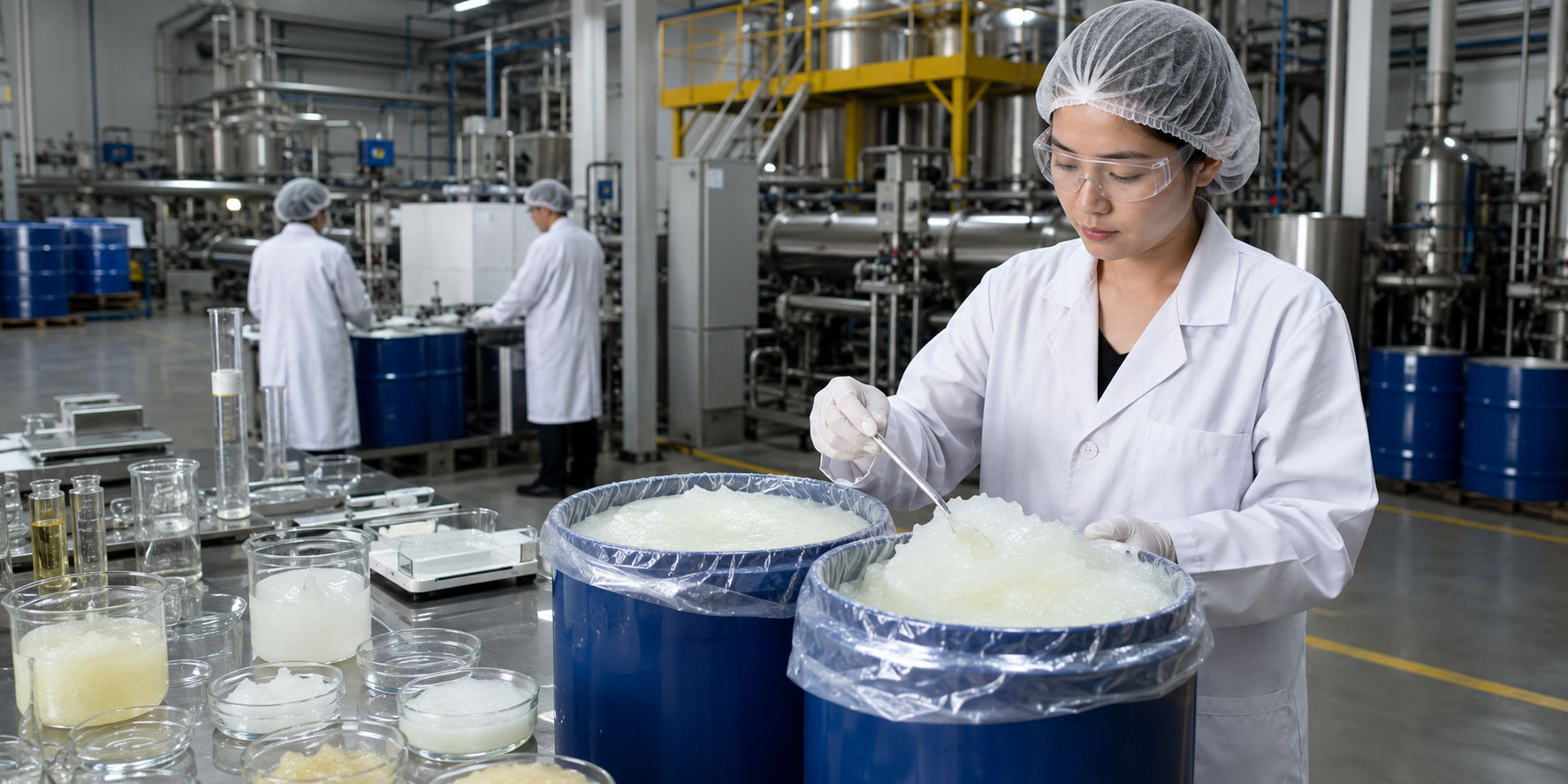
In industry, Vaseline is used to provide a temporary coating on metal, reduce surface contact with moisture, provide light lubrication, assemble parts, protect some joints, and for use in rubber or cable formulations. Grade selection should be weighed against operating temperature, type of metal or polymer, cleanability, and compatibility with subsequent processing.
A more specialized description of this application is provided in the article Industrial Vaseline to protect metal surfaces from moisture and rust Read.
How does Vaseline work for the skin?
Vaseline is classified as an occlusive. Once applied to the skin, it forms a hydrophobic layer that reduces water evaporation from the stratum corneum. For this reason, application to slightly damp skin is usually more effective than application to completely dry skin, as the product helps retain existing water.
This is different from water-absorbing humectants like glycerin. Vaseline does not produce water and does not treat the underlying cause of dry skin. Medical sources list petrolatum as one of the most effective occlusive agents for reducing skin water loss, but its effectiveness and tolerability depend on the skin condition and the final formulation.
People prone to acne or those who experience breakouts, redness, or itching after use should discontinue use and consult a dermatologist. It is not recommended to use industrial grade or non-specification products on the skin.
Using Vaseline for superficial wounds
For small, clean, non-infectious cuts and scrapes, a thin layer of plain petroleum jelly can help prevent the wound surface from drying out. The American Academy of Dermatology recommends that superficial wounds be cleaned with water and a mild detergent, then kept moist and covered with an appropriate dressing. Using a tube product can reduce the risk of cross-contamination from shared containers.
Vaseline is not suitable for self-treatment on deep wounds, puncture wounds, bites, serious burns, infected wounds, diabetic wounds, or wounds that are painful, swollen, oozing, or red. In these cases, as well as surgical wounds, a doctor's or medical facility's prescription is preferred. The FDA also warns against use on deep wounds, animal bites, and serious burns in its labeling of skin protection products.
Precautions and usage restrictions
- Do not use an industrial product on the skin, lips, mucous membranes, or wounds unless its grade and suitability for the intended use have been documented.
- Vaseline is not a treatment for acne, eczema, psoriasis, infections, wrinkles, or hair loss and should not be used as a substitute for prescribed medication.
- Avoid contact with eyes and discontinue use if irritation, itching, or persistent redness occurs.
- Continuous intranasal use is not generally recommended. Prolonged inhalation of oily substances into the respiratory tract has been associated with lipoid pneumonia in rare cases; ask your doctor or pharmacist about an option for dry nose.
- Keep cloth, gauze, or clothing soaked in petroleum-based materials away from flames, cigarettes, and sources of ignition. Washing may not remove all oily residue.
- In baby, medicinal or mucous products, use only the approved finished product as labeled; the industrial raw material is not designed for direct consumption.
What indicators are used to evaluate the quality of Vaseline?
The quality of petrolatum must be measured by a series of tests. The acceptable limits for each indicator depend on the grade, standard, and purchasing contract. Common examples include:
- Appearance, uniformity and absence of oil separation or foreign particles.
- Color and odor within agreed specifications.
- Consistency, permeability or rheological tests appropriate to the application.
- Dropping point or corresponding thermal characteristic to control behavior at temperature.
- Acidity or alkalinity, ash and other measurable impurities.
- Identification and purity tests according to the pharmacopoeia or claimed standard for pharmaceutical grades.
- Specification consistency between production batches and batch number traceability.
White color, clean packaging or the words “hygienic” on the invoice are not a substitute for CoA and technical standards. The professional buyer should specify the formulation, temperature, human contact and target market for which the product is being prepared.
What should you check when buying Vaseline in bulk?
Before requesting a quote, define the end use and required specifications. This will prevent purchasing the wrong grade and costly formulation modifications. A bulk purchasing checklist includes the following:
- Grade determination: industrial, cosmetic, or pharmaceutical with a specific standard.
- Request TDS, batch analysis sheet and, if required, SDS and certificates of compliance.
- Checking color, odor, consistency, dropping point, and other critical process indicators.
- Sample testing in formulation or production line before bulk purchase.
- Check the type of barrel or packaging, net weight, shipping conditions, and storage temperature.
- Agreement on specification consistency, consignment acceptance procedure and non-conformance management.
To view the product's specialized page and receive available specifications, go to the page Vaseline Arash Mahya See. The final choice should be made based on your sample, analysis, and application.
The difference between Vaseline and paraffin, mineral oil and glycerin
Vaseline, solid paraffin, mineral oil, and glycerin are sometimes mistakenly used interchangeably, even though they have different structures and functions.
Vaseline is a semi-solid, jelly-like substance at room temperature and is composed of a combination of wax and oil. Solid paraffin has a waxier, harder structure and is used in candle production, coatings, packaging, and many other industries. For a more complete definition, see the article What is paraffin? See.
Mineral oil or liquid paraffin is fluid and does not have the semi-solid network of petrolatum. It can be a component of oil-based formulations, but it is not the same consistency and application as Vaseline. More details on the page Liquid paraffin It is presented.
Glycerin is a humectant and helps to attract and retain water in the formula; petrolatum reduces water loss primarily by creating a barrier layer. In many formulas, these two mechanisms can complement each other, but are not direct substitutes for each other.
Storage and transportation conditions of Vaseline
Vaseline should be stored in clean, compatible, closed containers, away from contamination, excessive light, and unnecessary heat sources. Storage temperatures should be consistent with the supplier's TDS. Excessive heat can soften or liquefy the product, and extreme cold may alter the texture; therefore, product uniformity should be checked after returning to process temperature before use.
When harvesting from barrels, use clean, dry equipment. The ingress of water, dust, or other material residues can reduce batch quality. For pharmaceutical and cosmetic grades, hygiene, traceability, tool segregation, and cap control are especially important.
Conclusion: Choose Vaseline Based on Grade, Not Appearance
In the final answer to the question "What is Vaseline?", petrolatum is a semi-solid mixture of refined heavy hydrocarbons whose texture, color, and characteristics are regulated by the feedstock and refining process. It is not a pure compound with a single molecular formula, and the names Vaseline, Petroleum Jelly, and Petrolatum all refer to the same family of products in many applications.
The most important principle in consumption and purchase is to choose the grade appropriate for the application. Industrial grade is designed for technical performance; cosmetic grade must meet the requirements of the raw material of care products; and pharmaceutical grade must comply with the declared standard and relevant tests. White color or purification claim is not enough to make a decision without quality control documents.
To check other basic materials and industrial products, you can visit the section Arash Mahya Products See also the page to select the grade appropriate for your formulation or process. Contact us Submit the required technical specifications.